

Key Takeaways
- Data-driven strategies empower organizations to design workspaces tailored to employee needs, improving both efficiency and engagement.
- The adoption of IoT and AI enables seamless, real-time data collection and analysis to drive workspace optimization.
- Addressing data integration complexities and employee privacy concerns is essential for long-term success.
Table of Contents
- Introduction
- Benefits of Data-Driven Workspaces
- Technologies Enabling Data-Driven Decisions
- Real-World Examples
- Challenges and Considerations
- Steps to Implement Data-Driven Strategies
- Conclusion
In today’s fast-changing work environment, data-driven decision-making has become critical for organizations aiming to create smarter, more effective office spaces. Companies are turning to digital solutions and real-time intelligence, such as location data analytics, to gain insights into workspace use. This approach goes beyond mere intuition, providing actionable information that can directly shape the design, functionality, and atmosphere of modern workplaces.
Leveraging such data, businesses can identify trends, uncover inefficiencies, and adapt environments to boost employee productivity and satisfaction. As hybrid and flexible work models gain traction, the ability to monitor and respond to actual behaviors has become even more significant. This evolution fuels the adoption of state-of-the-art technology designed to optimize the use and allocation of office resources, ultimately supporting growth and innovation.
Introduction
The workplace is undergoing a fundamental transformation, driven by rapidly shifting expectations and the need for agile, people-centric environments. Modern organizations now view workspace design as a strategic tool for attracting and retaining talent, fostering creativity, and enhancing business outcomes. Data-driven decision-making, underpinned by advanced analytics, is at the heart of this shift. It enables businesses to align their office spaces with actual employee behaviors, needs, and emerging work trends. According to an analysis by McKinsey & Company, organizations that leverage data to improve employee experiences see significant increases in performance and engagement.
This focus on actionable intelligence ensures that offices are neither underutilized nor overcrowded. It also allows businesses to allocate resources effectively and create spaces that adapt as work patterns evolve.
Benefits of Data-Driven Workspaces
Implementing data-driven strategies in workspace design yields distinct advantages:
- Enhanced Productivity: By tracking how employees actually interact with office spaces, organizations can refine layouts to minimize distractions, promote focused work, and support diverse working styles.
- Improved Collaboration: Data reveals the types of environments that drive spontaneous interaction and creativity. This information helps in designing office zones, meeting areas, and communal spaces that foster teamwork.
- Cost Efficiency: Analysis of occupancy rates and usage patterns helps identify underutilized areas that can be repurposed or downsized. Organizations can redirect investments to initiatives that matter most, resulting in direct cost savings.
Technologies Enabling Data-Driven Decisions
Several technologies play a pivotal role in enabling data-driven workspaces:
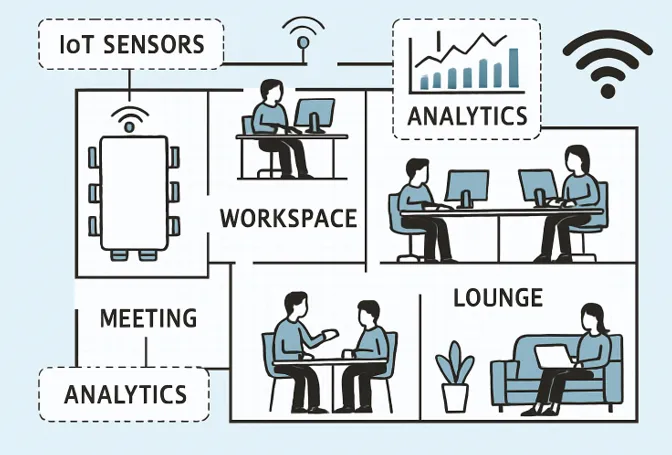
- Internet of Things (IoT): IoT sensors measure occupancy, air quality, temperature, lighting, and movement, providing real-time feedback on space usage. These insights help organizations maintain optimal conditions and energy efficiency.
- Artificial Intelligence (AI): AI-driven platforms analyze mountains of data to predict trends, automate adjustments, and suggest improvements. This approach reduces manual monitoring and increases response speed.
- Cloud Computing: With cloud-based tools, companies can store and process large volumes of data securely and access valuable insights from anywhere, enabling remote monitoring and scalable solutions.
Real-World Examples
Leading organizations are already reaping the benefits of a data-driven approach. Microsoft, for example, studied employee movement via Wi-Fi data over six months, refining its office layouts based on real patterns rather than assumptions. The result was improved productivity and more adaptable workspaces.
Similarly, financial institutions and creative agencies have reported success by using workspace analytics to guide renovations and optimize employee-to-desk ratios. Data has empowered them to introduce flexible seating, upgrade meeting spaces, and reassess facility investments, reshaping their real estate portfolios to match current needs.
Challenges and Considerations
Despite its advantages, implementing a data-driven workspace strategy presents several challenges:
- Data Integration: Merging information from disparate systems and devices is complex. It requires a robust IT infrastructure and standardized protocols to ensure consistent, actionable outputs.
- Privacy Concerns: Gathering workplace data, especially when tracking movement or usage, must align with privacy regulations and maintain employee trust. Transparent communication and anonymization of individual data are fundamental.
- Change Management: Employees often resist changes to their routines or surroundings. Successful projects include strong communication strategies, inviting feedback, and demonstrating clear benefits to users.
Staying informed about national and international data privacy laws is crucial. Resources like the New York Times Technology section provide ongoing coverage of regulatory updates.
Steps to Implement Data-Driven Strategies
- Assess Current Workspace Utilization: Deploy sensors and analytics to monitor present conditions and space usage. Establish a baseline to measure future improvements.
- Define Objectives: Be precise about what you want to achieve, whether it’s greater collaboration, lower costs, improved well-being, or a blend of goals.
- Implement Technology Solutions: Select and install IoT devices and analytics platforms that best fit your organization’s needs. Ensure data is collected securely and can be integrated across platforms.
- Analyze Data and Gain Insights: Regularly review reports and dashboards to uncover patterns and identify opportunities for enhancement.
- Make Informed Changes: Adjust the physical environment based on insights, and track results to confirm that changes deliver the intended value.
Conclusion
Adopting data-driven decision-making in workspace design sets organizations up for long-term success, enabling them to create agile, efficient, and engaging environments. By merging technology, human-centric design, and actionable analytics, companies can continually refine office strategies, nurture a culture of innovation, and remain responsive to their teams’ evolving needs.