

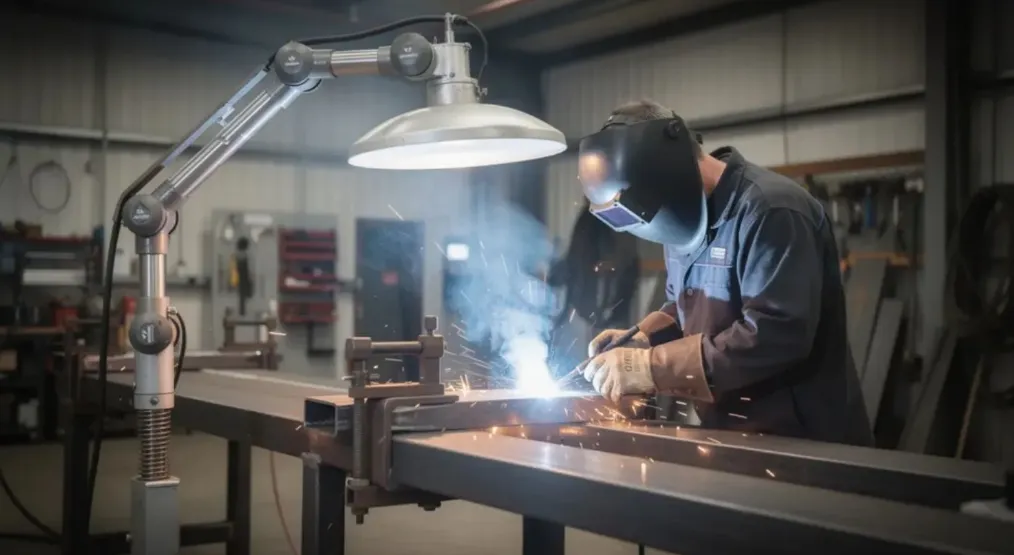
Welding fumes don’t just smell bad. They accumulate in the lungs, trigger respiratory problems over years, and create liability exposure for shop owners and managers who ignore them. The issue is so common that most fabrication shops treat it as background noise, yet a single air quality failure can affect worker retention, productivity, and compliance standing. Addressing welding safety tips early in your operation prevents costly problems down the line.
Key Takeaways
- Poor air quality in welding shops causes immediate health effects and long-term respiratory damage that impacts worker retention and absenteeism.
- Many shops operate with inadequate ventilation despite regulations and standards that clearly define minimum air quality requirements.
- Fume extraction systems come in portable and fixed configurations, allowing shops of any size to implement solutions that fit their layout and budget.
- Regular maintenance and proper placement of extraction equipment determines whether your system actually works or just moves bad air around.
Why It Matters
Welders and fabricators breathe in zinc oxide, manganese, iron oxide, and other particulates during every shift. These fumes don’t stay in the local breathing zone if your shop lacks proper extraction. They spread across the entire workspace, affecting not just the person at the torch but everyone else in the facility. Over time, chronic exposure leads to metal fume fever, welding-related lung disease, and accelerated respiratory decline that workers often don’t realize is happening until symptoms appear.
From a business perspective, poor air quality drives turnover. Experienced welders leave shops with bad air for competitors offering better working conditions. Recruiting replacements and training new staff costs time and money. Beyond retention, productivity suffers because workers in uncomfortable, unhealthy environments don’t perform at their peak. They take more sick days, work slower, and make more mistakes that require rework.
Regulatory bodies like OSHA and ANSI have published standards for welding fume concentration, but enforcement is inconsistent. That said, the standards exist for a reason: they reflect the actual threshold where health damage starts. Ignoring them puts your shop at legal risk and, more importantly, harms the people working for you.
The Real Cost of Neglecting Fume Extraction
Shop owners sometimes treat fume extraction as a “nice-to-have” rather than essential infrastructure. This calculation is flawed. A worker who develops chronic lung issues doesn’t just cost money in workers’ compensation claims; they become less productive long before a claim is filed. Their morale affects the whole team.
Many shops operate with open-door ventilation and hope that natural air movement handles fumes. This approach fails in most climates. Winter means closed doors and trapped air. Summer brings warm air that doesn’t flow naturally toward extraction points. Even with ideal conditions, passive ventilation cannot capture fumes at the source where extraction is most effective.
The alternative, active fume extraction, uses ducting and fans to pull fumes away from the breathing zone before they disperse. Portable units work well for smaller shops or spaces where fixed extraction isn’t practical. Industrial-grade systems serve shops running multiple welders simultaneously or operating in larger facilities. Both approaches require proper sizing, placement, and maintenance to function as designed.
Portable vs. Fixed Extraction Systems
Portable fume extractors offer flexibility. They move from station to station, serve temporary work areas, and require no permanent installation. For a small shop with one or two welding stations or a fabrication facility that changes layout frequently, portability solves logistics problems. These units capture fumes through flexible ducting positioned close to the weld, then filter the air and return it to the workspace or vent it outside depending on the model.
Fixed systems handle higher volume and more consistent duty cycles. When a shop runs the same welding operations in the same locations day after day, a permanently installed extraction system with dedicated ductwork becomes more cost-effective than relocating portable units. Fixed systems scale to handle multiple welding stations, grinding operations, and other activities that generate smoke or dust.
The choice between portable and fixed depends on your shop’s size, layout, budget, and work patterns. A shop with one welding station and tight budget starts with a portable unit. A facility with five welders and stable operations invests in a fixed system. Many shops use both, deploying portables in flexible zones and fixed systems in core operations.
Filtration and Maintenance
Extraction equipment only works if filters stay clean. Clogged filters reduce airflow, forcing the system to work harder and draw more energy. Over time, a severely clogged filter can fail entirely, leaving you back where you started: welding fumes in the air with no active capture.
Filter replacement schedules depend on how heavily the system operates. A shop running welders eight hours daily will need more frequent filter changes than one with lighter duty cycles. High-efficiency particulate air (HEPA) filters trap smaller particles but clog faster than standard filters. The trade-off between filtration efficiency and maintenance frequency must factor into your equipment selection and budget planning.
Proper ductwork also matters. Extraction systems require intake ducting positioned at the source of fumes, usually within six to twelve inches of the weld area. If ducting is too long, too narrow, or poorly routed with sharp bends, airflow suffers and fume capture fails. Periodic inspection of ducting for leaks, dents, and buildup ensures the system performs as intended throughout its service life.
Real-World Impact: Small Fabrication Shop Example
Consider a five-person fabrication shop that welded structural components on a contract basis. For years, the owner relied on open garage doors and cross-ventilation. When hiring demand forced her to run two welders simultaneously, air quality degraded noticeably. Workers started commenting on headaches and fatigue by mid-shift. Turnover spiked as the shop’s best welder took a job elsewhere, citing working conditions.
The owner installed two portable fume extractors positioned at each welding station. Within weeks, shop air noticeably improved. The remaining welder stayed on, and recruiting new staff became easier because the shop could now market itself as having better air quality than competitors. Productivity went up because workers felt better during shifts. The total investment in two portable units paid for itself through reduced turnover and improved efficiency within eighteen months.
This scenario repeats across welding shops nationwide. The key insight is that air quality affects your bottom line, not just worker health. Shops that treat fume extraction as essential infrastructure gain competitive advantage in hiring and retain more of their investment in workforce development.
Compliance and Standards
OSHA’s permissible exposure limit for welding fumes is eight-hour time-weighted average concentration of five milligrams per cubic meter. ANSI standards offer more detailed guidance on ventilation design and air quality assessment. Meeting these standards requires a combination of engineering controls (extraction systems), work practices (positioning, technique), and personal protective equipment (respirators when necessary).
Compliance is not one-and-done. It requires ongoing monitoring, filter maintenance, equipment inspection, and regular training for welders on proper use of extraction equipment. A shop can install the best system available and then undermine it through poor maintenance or operator misuse.
Actionable Takeaways
- Assess your current air quality. Walk through your shop during welding operations and honestly evaluate whether fumes linger in the breathing zone. If they do, extraction is needed.
- Match extraction type to your operation. Portable systems suit small or flexible operations. Fixed systems serve established shops with stable welding stations and higher volume.
- Size equipment correctly. A system that’s too small for your shop’s welding load won’t capture fumes effectively. Undersizing is one of the most common mistakes.
- Establish a filter replacement schedule. Document when filters need changing based on your duty cycle. Set calendar reminders and stick to the schedule.
- Position ducting close to the source. Fume capture works best when intake is within six to twelve inches of the weld. Poor placement renders even good equipment ineffective.
- Train welders on proper use. Extraction equipment only works if operators position it correctly and keep filters in good condition. Make maintenance part of daily routine.
- Monitor air quality over time. Schedule periodic assessments to confirm your system is delivering the air quality you expect. Changes in operations may require adjustments.
Conclusion
Welding shop air quality directly affects worker health, retention, productivity, and compliance. Poor air quality is not inevitable. Portable and industrial-grade fume extraction systems exist at various price points and configurations to fit different shop sizes and operational needs. The investment in proper extraction pays dividends through healthier workers, better retention, and operational efficiency. Treating air quality as a core operational priority, not an afterthought, separates shops that succeed long-term from those that struggle with turnover and reputation damage.
FAQ
How often should I replace filters in a welding fume extractor?
Filter replacement intervals depend on how heavily your shop uses the system. A shop running welders eight hours daily might need filter changes every one to three months, while lighter-duty shops might go three to six months. Check your extractor’s manual for the manufacturer’s recommendation and monitor filter condition regularly. If airflow noticeably decreases before the recommended interval, change the filter earlier.
Can I use a shop vacuum instead of a dedicated fume extractor?
Shop vacuums are not designed to handle welding fumes. They lack the filtration efficiency and continuous-duty capability of proper extraction systems. Using a shop vacuum for welding fumes will clog the filter quickly, reduce performance, and expose workers to fumes that should have been captured. A dedicated fume extractor is the correct solution.
What size fume extractor do I need for my welding shop?
Extractor sizing depends on the volume of air your shop needs to process, measured in cubic feet per minute (CFM). This varies by the number of welders, their duty cycles, and your shop’s layout. A qualified supplier can help you calculate the right size based on your specific operations. Undersizing is a common mistake that leaves fumes uncontrolled, so when in doubt, consult with an equipment specialist.
Do I need to vent fume extractor air outside, or can it return to the shop?
Some extractors with high-efficiency filters can safely return filtered air to the shop, saving heating and cooling costs. Others are designed to vent outside. Your choice depends on the extractor model, local regulations, and shop layout. Read the equipment specifications and follow the manufacturer’s guidance. Some operations use combination approaches, with some units venting outside and others recirculating filtered air.
Is a portable fume extractor as effective as a fixed system?
Both portable and fixed systems can be effective if properly sized and positioned. Portable units excel at flexibility and work well for small shops or variable operations. Fixed systems handle higher volume and continuous duty better. The difference is not in effectiveness but in suitability for your specific workflow. A well-positioned portable unit works better than an undersized fixed system.
What should I do if my extractor runs but air quality doesn’t improve?
Check these items in order: filter condition (may be clogged), ducting position (should be within six to twelve inches of the weld), ducting for leaks or blockages, and system sizing (may be undersized for your operation). Often the extractor itself is fine, but placement or maintenance is the problem. If you’ve checked these items and air quality still doesn’t improve, contact the equipment manufacturer or supplier for diagnosis.
Metadata
URL slug
welding-shop-air-quality-matters
Copy
Meta title (44/58)
Welding Shop Air Quality: Impact & Solutions
Copy
Meta description (135/155)
Poor air quality in welding shops costs money and health. Learn why it matters and what steps to take to improve your shop environment.