

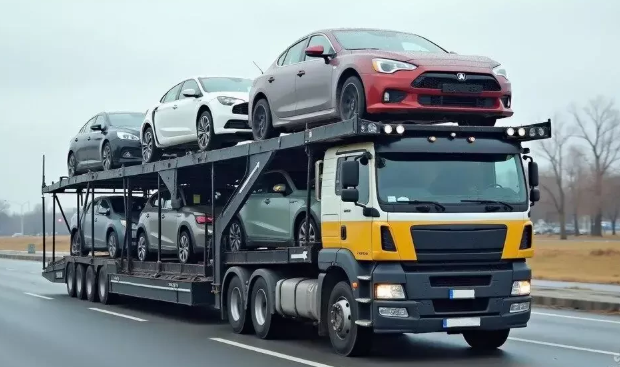
Most people have a vague sense of how car shipping works – a truck shows up, loads your vehicle, and delivers it somewhere else. What happens between those two moments is considerably less understood, and that gap in understanding is where most of the confusion, frustration, and avoidable mistakes in the auto transport process originate. The mechanics of moving a vehicle across state lines involve a specific regulatory framework, a logistics chain with multiple participants, and a set of operational realities that shape everything from pricing to timing to the way damage claims are handled.
Understanding how the process actually works – not just the surface-level description, but the operational reality underneath it – makes you a significantly better consumer of these services. You ask better questions, evaluate providers more accurately, recognize warning signs earlier, and arrive at the other end of the transaction with fewer surprises. This guide covers the complete picture of state-to-state vehicle transport, from the regulatory framework that governs it to the practical steps that determine whether your experience is smooth or stressful.
The Regulatory Framework Behind Interstate Vehicle Transport
Vehicle transport across state lines is a federally regulated activity in the United States. Any company that moves vehicles commercially between states must be registered with the Federal Motor Carrier Safety Administration and hold an active MC Number – a Motor Carrier number that confirms their legal authorization to operate interstate transport and their compliance with federal insurance requirements.
This registration requirement exists because interstate commerce falls under federal, not state, jurisdiction. A company moving vehicles within a single state may operate under state-level licensing only, but the moment a shipment crosses a state line, federal FMCSA regulations apply. These regulations cover minimum insurance requirements, driver qualification standards, vehicle inspection requirements, and hours-of-service rules that govern how long a driver can operate before mandatory rest periods.
For customers, the practical implication is straightforward: every legitimate provider of interstate vehicle transport holds a verifiable MC Number. Checking that number on the FMCSA website before you commit to any provider is the single most reliable verification step available. It confirms operating authority, insurance status, and regulatory compliance in a single two-minute check. Companies without a valid MC Number are operating illegally, carry no guaranteed insurance coverage, and have no regulatory accountability if something goes wrong during your shipment.
The Participants in a State-to-State Transport Transaction
A standard state-to-state vehicle transport transaction involves more participants than most customers realize, and understanding each role clarifies both the pricing structure and the accountability chain.
The customer is the vehicle owner who initiates the transaction by requesting a quote and booking a shipment. The customer’s responsibilities include providing accurate vehicle information, preparing the vehicle properly for transport, being available during the pickup and delivery windows, and conducting thorough inspections at both ends of the transaction.
The broker is the company most customers interact with directly. Brokers do not own trucks – they maintain networks of licensed carriers and use load boards and direct relationships to match customer shipments with available drivers. The broker manages customer communication, processes the booking, and handles disputes if they arise. Their revenue comes from the margin between what the carrier charges and what the customer pays, built into the quoted price as a single number.
The carrier is the company or owner-operator who owns and drives the actual transport vehicle. On a typical open carrier, the driver hauls between six and ten vehicles simultaneously, following a route that has been optimized to serve multiple customers efficiently. The carrier is responsible for loading, securing, and safely delivering vehicles, and their cargo insurance covers the vehicles in their care during transit.
Understanding this chain matters when problems arise. If your vehicle is damaged during transit, the claim runs through the carrier’s insurance – not the broker’s. The broker’s role in a dispute is to facilitate communication and, in some cases, advocacy with the carrier. Knowing this in advance helps you ask the right questions about insurance coverage and claims processes before you commit to a booking.
How the Dispatch and Routing Process Works
Once a customer books a shipment through a broker, the broker posts the job to a load board – a digital marketplace where licensed carriers can see available shipments and bid on them. The carrier who accepts the job does so at a rate that allows the broker to cover their margin while delivering the quoted price to the customer. This process typically takes between 24 and 72 hours, which is why most brokers provide a pickup window rather than a specific date.
The routing logic that carriers use to plan their hauls is driven by efficiency. A driver heading from Atlanta to Denver does not take a single direct route – they plan a path that allows them to pick up vehicles at multiple points along or near the corridor and deliver them to destinations that can be served without significant detour. This is why your vehicle may be picked up a day or two into the booking window rather than immediately, and why delivery estimates are ranges rather than precise commitments.
On very long hauls – coast-to-coast shipments, for example – your vehicle may be transferred at a regional hub from one carrier to another. This is standard industry practice and does not indicate a problem with your booking. The transfer is documented, the insurance coverage transfers with the vehicle, and the customer is typically notified when it occurs. If seamless single-carrier transport is important to you, ask specifically about transfer practices when collecting quotes.
What State-to-State Car Towing Actually Involves
The term towing in the context of state to state car towing refers broadly to the process of moving a vehicle over a long distance using a carrier – it does not mean your car is towed behind a truck the way a broken-down vehicle is towed to a repair shop. In practice, state-to-state vehicle transport uses one of two primary methods.
Open transport is the industry standard. Your vehicle is driven onto a multi-car carrier trailer – the large transporters you see hauling vehicles on the interstate – secured with wheel straps and tie-downs, and transported alongside five to nine other vehicles. The carrier is open, meaning your vehicle is exposed to weather and road debris during transit. This is perfectly adequate for the vast majority of vehicles and represents the most affordable transport option available.
Enclosed transport uses a covered trailer that fully protects your vehicle from the elements. The interior of an enclosed trailer shields vehicles from rain, dust, road debris, and temperature fluctuations. Enclosed transport is used primarily for luxury vehicles, classic cars, and high-value collector items where cosmetic protection justifies the premium, typically 40% to 60% above open transport rates. For a standard daily driver, the additional cost of enclosed transport is rarely justified.
Door-to-door service means the carrier picks up your vehicle from your current address and delivers it to your destination address. Terminal-to-terminal service means you drop the vehicle at a designated hub and collect it from a hub near your destination. Door-to-door is more convenient and the standard choice for most customers. Terminal-to-terminal can reduce cost in some cases, but requires you to arrange transportation to and from the terminals at both ends of the journey.
The Bill of Lading: Your Most Important Document
The Bill of Lading is the legal document that records your vehicle’s condition at pickup and serves as the baseline for any damage assessment at delivery. It is the most important document in the entire transport transaction, and how carefully you handle it at both ends of the journey directly determines your ability to pursue a damage claim if something goes wrong.
At pickup, the driver will inspect your vehicle and note any existing damage on the Bill of Lading – scratches, dents, paint chips, cracked glass, and anything else that is present before loading. Review this inspection carefully and ensure every pre-existing imperfection is accurately recorded before you sign. If the driver misses something or records damage inaccurately, correct it before signing. Your signature on the Bill of Lading confirms that you agree with the recorded condition of the vehicle at that moment.
Upon delivery, thoroughly inspect the vehicle before signing the final Bill of Lading. Compare its condition against the pre-shipment photographs you took and against the condition recorded at pickup. Check every panel, the roof, the glass, the mirrors, and the undercarriage if accessible. Any damage that was not present at pickup should be noted on the delivery document before you sign and before the driver leaves. Once you sign the delivery Bill of Lading without noting damage, your ability to file a successful claim for that damage is significantly compromised.
How to Use Professional Auto Transport Services Effectively
The customers who consistently have smooth state-to-state transport experiences share a specific set of practices. They book early – three to four weeks in advance, where possible – which gives them access to the full range of available carriers and pricing options without deadline pressure. They provide flexible pickup windows rather than demanding specific dates, which makes it easier for carriers to slot their vehicle into efficient routes. And they do their due diligence on providers before committing rather than defaulting to the lowest available quote.
When evaluating auto transport services for the first time, verify every provider’s MC Number on the FMCSA website, confirm that the quoted price is guaranteed rather than an estimate, understand the insurance terms completely before signing, and read independent review histories on the Better Business Bureau and Trustpilot for any provider you are seriously considering. Collect three to five detailed written quotes, compare them on all relevant dimensions together, and choose the provider who best combines verified credentials, clear contract terms, and a demonstrated track record of reliable delivery.
Prepare your vehicle properly before pickup – clean it thoroughly, remove all personal belongings, keep the fuel tank at a quarter full, disable any automatic alarms, and take high-resolution time-stamped photographs from every angle. Review the Bill of Lading carefully at both pickup and delivery. These steps take less than two hours in total and provide comprehensive protection against the most common sources of dispute and frustration in the transport process.
The Bottom Line on State-to-State Vehicle Transport
State-to-state car transport is a mature, well-regulated industry that moves millions of vehicles reliably every year. The customers who have problems are almost always those who entered the market without understanding it – who chose providers based on price alone, skipped the verification steps, signed documents without reading them, or failed to document their vehicle’s condition before and after transit.
The information in this guide eliminates all those risks. Apply it consistently, and interstate vehicle transport becomes exactly what it should be – a straightforward logistical service that gets your car from one state to another safely, reliably, and at a fair price.