

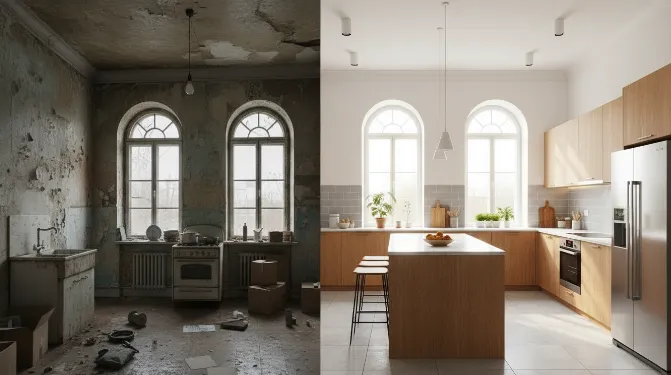
Designing a room rarely starts with certainty. It begins with fragments: a reference photo saved too late at night, a vague sense that “something feels off,” or a budget constraint that keeps shifting. VDraw approaches this reality directly. Its AI-powered workflow doesn’t promise instant perfection. Instead, it helps users move from hesitation to decision, one visual step at a time, with AI Room Design as a practical anchor rather than an abstract concept.
Why Room Design Decisions Stall in the Real World
The gap between imagination and execution
Most people can describe what they like, but struggle to picture how it all fits together. Colors clash unexpectedly, furniture proportions feel wrong, and lighting behaves differently than imagined. This gap causes delay. Without a concrete visual reference, decisions rely on guesswork, and guesswork invites revisions. Room design stalls not because of lack of taste, but because mental images are fragile.
Overconfidence in static references
Mood boards and inspiration galleries feel productive, yet they freeze ideas in isolation. A chair looks perfect alone but overwhelms a small living room. A color palette feels balanced until real lighting is applied. Static references don’t respond when constraints change. Designers and homeowners often realize too late that they optimized pieces, not spaces.
The cost of late corrections
Once construction starts or furniture is ordered, every adjustment costs more than time. It drains energy and confidence. People become conservative, avoiding exploration to prevent mistakes. Ironically, this fear leads to bland outcomes. The room works, but it doesn’t feel intentional.
How VDraw Reframes the Room Design Process
Starting from what already exists
Instead of asking users to imagine from scratch, VDraw encourages starting with reality. Uploading an existing room photo or a rough sketch grounds the process. The AI reads spatial relationships, not just objects. Walls, openings, and light sources become part of the decision logic. This immediately reduces abstraction and shortens the distance between idea and outcome.
The first decisive visual with AI Room Design
When users first engage with AI Room Design, the shift is noticeable. The room stops being a mental exercise and becomes a negotiable object. Users don’t ask, “Will this work?” They ask, “Is this closer?” That question is easier to answer. It turns uncertainty into momentum and replaces vague doubt with concrete judgment.
Iteration without emotional fatigue
Traditional redesign cycles exhaust people because each revision feels like admitting failure. VDraw reframes iteration as exploration. Generating alternatives is fast and visually consistent, so changes don’t erase progress. Users compare states side by side, learning their own preferences in the process. This keeps emotional energy intact and decisions grounded.
From Concept to Layout: Practical Control, Not Decoration
Reading spatial balance early
Room design often fails at scale. Furniture fits individually but crowds the room together. VDraw’s visual outputs expose balance issues immediately. Negative space, walking paths, and focal points become visible before commitment. Users adjust layouts while changes are still cheap, both financially and cognitively.
Lighting as a decision driver
Lighting rarely gets enough attention early on. VDraw surfaces it naturally by showing how materials and colors behave under different light conditions. This affects more than mood. It influences furniture choice, wall finishes, and even storage decisions. Seeing these interactions early prevents mismatches that usually appear only after installation.
Materials tested in context
Textures and finishes behave differently when combined. A polished surface may amplify light, while matte materials absorb it. VDraw places materials into real spatial contexts, revealing interactions that catalogs hide. Users learn faster by seeing mistakes before they make them, rather than explaining them afterward.
Workflow Discipline for Professionals and Serious Planners
Reducing subjective debate
In professional settings, room design discussions often loop endlessly. Stakeholders interpret sketches differently, and preferences collide. Visual AI outputs narrow the debate. Feedback becomes specific. Instead of abstract opinions, conversations focus on observable details. This shortens approval cycles and keeps projects moving.
Consistency across multiple spaces
Designing one room is manageable. Designing ten introduces inconsistency. VDraw allows designers to reuse visual logic across projects. Proportions, color strategies, and layout principles carry over without copying blindly. AI Room Design becomes a reference system rather than a one-off experiment.
Faster onboarding for new collaborators
When new team members join a project, understanding past decisions takes time. Visual histories generated through VDraw compress this learning curve. New contributors see what was tested, rejected, and refined. This reduces rework and protects design intent from accidental drift.
Beyond Rooms: Supporting Visual Output Quality
Preparing assets for presentation
Room design rarely ends with the room itself. Visuals travel into proposals, listings, and client decks. VDraw’s image processing tools help maintain clarity across these outputs. Clean visuals reinforce trust, especially when decisions need buy-in from non-designers.
Removing distractions from shared visuals
When visuals include unnecessary marks or branding artifacts, attention shifts away from the design. In workflows where video walkthroughs or animated previews are shared, removing these distractions matters. Tools like the Video Watermark Remover integrated within VDraw’s ecosystem help keep the focus on spatial decisions rather than overlays.
Aligning visuals with decision moments
Not every output needs to be perfect. Some visuals exist only to answer a single question. VDraw supports this pragmatism. Users generate what they need, when they need it, without polishing everything to presentation level. This restraint keeps the process efficient.
Learning Taste Through Use, Not Theory
Discovering preferences through comparison
People often claim to know their style, until confronted with real options. VDraw accelerates this self-discovery. By comparing variations, users notice patterns in what they reject and accept. Preferences emerge from behavior, not description. This leads to more confident decisions over time.
Adjusting constraints without restarting
Budgets change. Furniture availability shifts. Family needs evolve. VDraw absorbs these changes without forcing a reset. Users adapt parameters and explore alternatives while preserving previous insights. The workflow remains intact even as conditions shift.
Building long-term judgment
Repeated use of AI Room Design sharpens intuition. Users begin to anticipate outcomes before generating them. The tool doesn’t replace judgment; it trains it. Over time, decisions become faster and more deliberate, supported by experience rather than impulse.
Long-Term Value Beyond a Single Project
Fewer revisions, steadier progress
When decisions are anchored in visuals, they hold. Users revisit them less often, freeing mental space for execution rather than review. This stability compounds across projects, making design feel manageable instead of overwhelming.
Scaling decision quality
As projects multiply, relying on memory fails. VDraw offers a repeatable structure that scales with demand. Quality stays consistent without constant oversight, allowing users to focus on strategy rather than correction.
A workflow that evolves with taste
Design is never finished. Tastes shift and priorities change. A visual decision process adapts without discarding past work. Users evolve their spaces gradually, with confidence that each step builds on the last.
VDraw doesn’t promise flawless rooms. It promises clarity at the moment clarity matters most. By grounding decisions in visual reality, AI Room Design becomes less about style trends and more about control, progress, and trust in one’s own judgment.