

Hawaii is a dream come true for many travelers—sun-kissed beaches, lush rainforests, and towering volcanic peaks. But while the islands’ beauty is often showcased in glossy brochures and postcards, there’s another side of Hawaii that is often overlooked: its rugged, untamed heart. The true Hawaii isn’t found at the hotel buffet. It lies beyond the resort gates, where the terrain is steep, the roads are narrow, and only the most resilient adventurers dare to explore.
For those willing to venture off the beaten path, Hawaii offers some of the most diverse and challenging landscapes on the planet. From the molten lava fields of the Big Island to the rain-soaked heights of Tantalus on Oahu, the island’s natural beauty isn’t just for tourists taking selfies on Waikiki—it’s for those who want to experience the island’s real spirit. But here lies the challenge: to truly see the island beyond the resorts, you need more than just a map or a rental convertible stuck in traffic. You need the right vehicle.
Beyond the Resort Gates: Hawaii’s Hidden Terrain Awaits
Hawaii’s pristine beaches are what draw the crowds, but the locals know the true treasure lies Mauka (inland toward the mountains), where volcanic ridgelines and dense rainforests reign. However, venturing Mauka is not a casual Sunday drive.
Picture this: You step out of your car near a trailhead. The air instantly feels different here—heavier. It hits you with a sticky humidity that clings to your skin. The scent isn’t just “flowers”; it’s a complex, earthy mix of wet fern, salt spray, and the distinct, sweet-sour smell of rotting strawberry guava fermenting on the roadside. This is the real, breathing jungle.
Yet, navigating this requires more than just a walking stick. Rental cars are forbidden on many of the best gravel access roads, and hiking ten miles in 90% humidity is a grueling test of endurance. This is where the landscape demands a vehicle capable of navigating extreme diversity—from sea-level sand to 4,000-foot muddy ridges—without the noise and exhaust of a gas engine breaking the silence.
Lava Fields: The Rough Terrain Challenge
The Big Island’s lava fields are some of the most stunning and hostile environments on earth. It looks like the surface of Mars. The volcanic rock is sharp, jagged, and unforgiving. Walking across these barren fields can leave your expensive hiking boots shredded, and falling here is not an option.
The best way to explore these vast, desolate areas is by electric mobility. But not just any scooter. You need a machine with serious clearance. Unlike loud gas-powered ATVs that scare away the nene (native geese), a high-performance electric dirt bike allows you to glide silently over the sharp lava rocks. You can feel the radiant warmth of the earth beneath you without disturbing the peace of the landscape. The suspension and wide tires are not luxuries here; they are necessities to absorb the constant, jarring vibration of the hardened lava flow, ensuring that the ride is as smooth as it is exhilarating.
Coastal Cruising: The Battle Against the Trade Winds
Hawaii’s coastal roads are breathtaking. From the winding Kamehameha Highway on Oahu’s North Shore to the road to Hana on Maui, these routes offer sweeping ocean views, clear skies, and the constant presence of the Trade Winds.
But here is the secret the brochures don’t tell you: the “breeze” is often a relentless 20mph headwind.
We’ve all seen the tourist on a rental bicycle, red-faced, standing on the pedals, barely moving forward, fighting an invisible wall of wind. It turns a leisurely ride into a punishing workout. This is where high-power electric mobility truly shines. With a robust motor assisting you, that headwind disappears. You can cut through the resistance effortlessly, actually enjoying the scent of the salt spray instead of gasping for air. The electric bike for adults platform allows riders to glide along the coast, covering 20 miles in the time it would take to pedal 5, making the most of the Golden Hour before sunset.
The Rainforest Ascent: Steep, Slippery, and Stunning
Hawaii’s towering rainforests present their own unique physics problem: Gravity.
The roads Mauka are incredibly steep. Grades of 15% to 20% are common in residential ridges like Wilhelmina Rise or Pacific Heights. And because it rains daily in the valleys, these roads are often covered in a thin, slick layer of moss and wet leaves. One wrong move on a standard bike tires could have you slipping in the mud.
Electric bikes are the perfect solution for navigating these green tunnels. But you need torque—raw pulling power. The motor ensures that riders can climb even the steepest, wettest hills without the rear wheel spinning out. Meanwhile, full suspension smooths out the ride over roots and potholes hidden by shadows, allowing riders to look up at the canopy instead of staring anxiously at the pavement.
The Island’s Best Kept Secret: Efficient, Electric Mobility
What if you could explore Hawaii without relying on the noise and pollution of cars, or the physical limitations of walking in the heat? Enter the new wave of island exploration. Whether you’re hopping from one trail to another, or traveling from your Airbnb to a local poke bowl spot, electric bikes offer an ideal solution.
For those with the spirit of adventure and the desire to see the island from Mauka to Makai, the equipment matters. You cannot bring a toy to a volcano. You need a tool.
The Perfect Ride: HappyRun G100 Pro
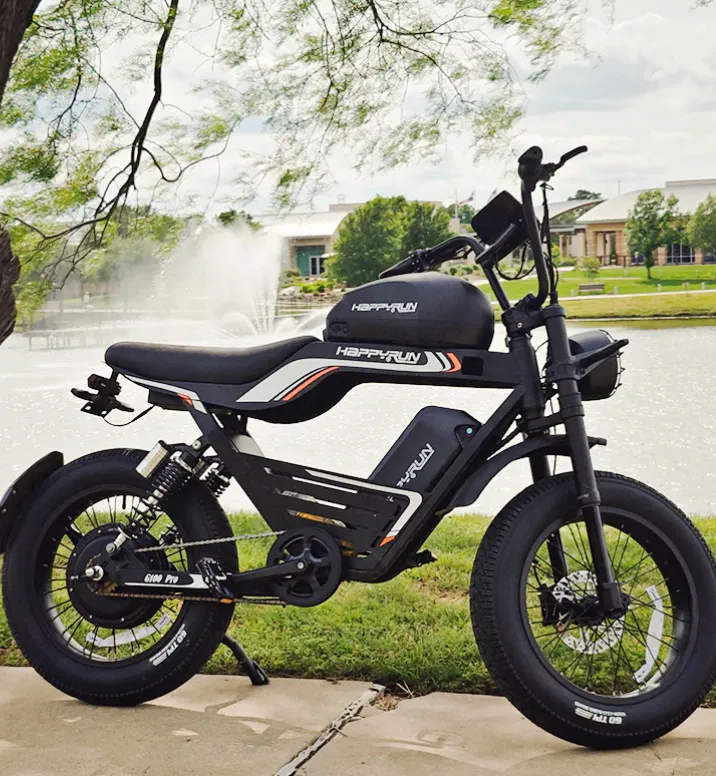
Introducing the HappyRun G100 Pro. Designed to handle even Hawaii’s most extreme landscapes, this machine is the ideal companion for those who want to explore the island without limits.
Why the G100 Pro is the “Volcano Tamer”:
- 6000W Peak Motor: This is the critical spec for Hawaii. Standard 750W e-bikes often overheat and cut out when climbing long volcanic roads. The G100 Pro’s 6000W peak power ensures that even on a 5-mile continuous ascent, the motor runs cool and strong. It doesn’t struggle; it conquers.
- 72V 33Ah Battery: Elevation eats battery life faster than distance. Climbing 2,000 feet requires massive energy. The 72V system guarantees that you have the voltage to reach the summit lookout and the capacity to cruise back down, giving you a range that fits an entire day of exploration.
- 50 MPH Speed: On roads like Kalanianaole Highway, where there is no bike lane, speed is safety. Being able to hit 50 MPH means you can flow with traffic rather than being a dangerous obstacle on the shoulder.
- Full Suspension: From the jagged lava rock of Kona to the root-filled trails of Manoa, the suspension smooths out the bumps, saving your back from the rugged reality of island roads.
Respecting the Land: Riding with the Aloha Spirit
Hawaii’s culture is rooted in “Aloha”—which means more than hello; it implies a mutual respect for the land (Aina) and the people. As you explore, remember that you are a guest.
The electric bike is the perfect tool for responsible tourism because of its silence. Locals value peace. Roaring through a neighborhood on a loud gas engine is a quick way to be unwelcome. An electric glide allows you to pass through unnoticed. It respects the wildlife, the residents, and the sanctity of the quiet places. Furthermore, the efficiency of the G100 Pro reduces your carbon footprint, aligning perfectly with Hawaii’s deep eco-conscious ethos.
Conclusion: The Real Hawaii Awaits
Hawaii is not just a paradise of sun and sand. Its true beauty lies in its rugged verticality, from volcanic craters to dense rainforests. To see the islands in their entirety, you need to leave the rental car gridlock behind. You need electric mobility—a vehicle that handles the heat, the hills, and the humidity while keeping you connected to the spirit of the place.
The HappyRun G100 Pro is the ultimate tool for this kind of adventure. It’s more than just an e-bike; it’s your ticket to the hidden Hawaii. Next time you’re on the islands, don’t just sit on the beach. Charge up, respect the land, and go see what lies at the top of the mountain.