

Running out of room does not always mean you need a bigger building. In many warehouses, the fastest path to better capacity is using vertical storage solutions more deliberately, so the space above your head becomes just as useful as the floor beneath your feet.
The basic idea is simple, but the payoff can be bigger than you might expect. When you stop treating vertical space like empty air, you can store more inventory, reduce clutter, improve picking flow, and make the whole operation easier to manage.
Look Up
More orders and faster customer expectations push facilities to do more without expanding every time demand rises. U.S. retail e-commerce sales reached $1.2337 trillion in 2025 and accounted for 16.4% of total retail sales, which tells you everything you need to know about the direction that the industry is headed.
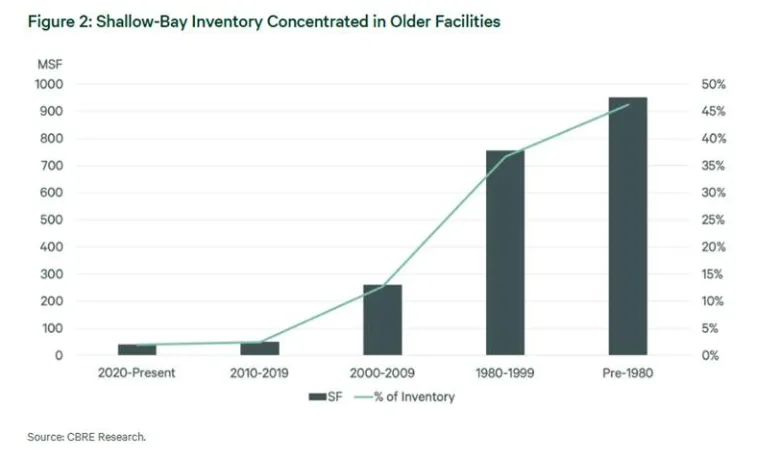
For smaller industrial users, space is particularly tight, as in major U.S. markets, more than 80% of shallow-bay industrial inventory was built before 2000, and properties built since 2010 account for only 5% of total inventory. That means many companies are working inside older buildings that were not designed for today’s storage demands.
Vertical thinking works so well because it lets you add capacity inside the box you already have.
Audit Before Purchase
It’s too easy to fall in love with new equipment before you actually understand your problem. To avoid this, start with the building you have. Measure the clear height and note obstructions before identifying which inventory is actually causing the squeeze.
Don’t be too surprised if you discover that the problem is not just a lack of space, but poor use of space. Pallets often sit in prime areas too long, while dead zones build up above shelving and around irregular corners.
A useful audit should answer these few questions:
· Which items are accessed daily, weekly, and rarely?
· How much clear vertical height is actually usable?
· Where do people waste the most walking time?
· Which inventory needs secure, controlled access?
· Which zones create congestion or safety issues?
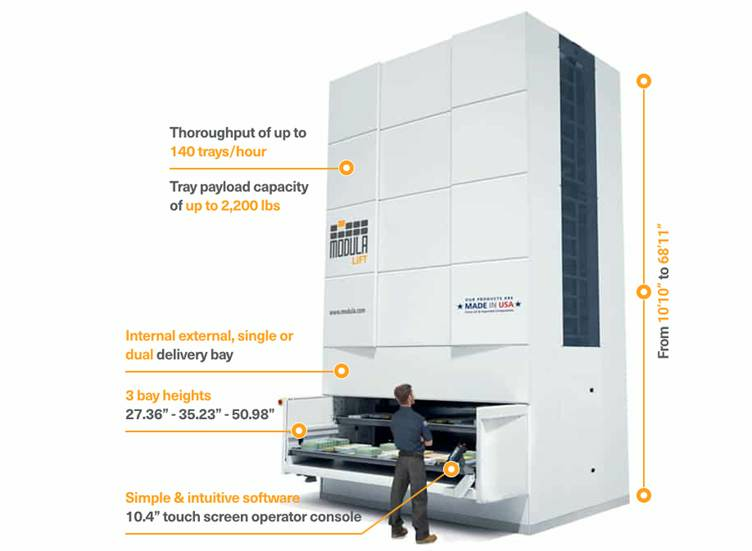
That kind of review tells you whether you need taller shelving, denser small-parts storage, a vertical lift module, better slotting, or a combination of all four.
Add Capacity and Cut Motion With Height
The best vertical storage setups create room and remove wasted motion.
When parts are stacked logically and positioned close to the point of use, employees spend less time hunting, bending, climbing, and backtracking. A well-designed system reduces touches, shortens pick paths, improves ergonomics, and makes replenishment more predictable.
If workers spend less time traveling and searching, they can spend more time doing productive work.
Balance Accessibility and Accuracy
One common mistake is to chase density so aggressively that accessibility gets worse. You want to use the cube of the building, but you do not want to hide your fastest-moving items in inconvenient places or create a system only one person understands.
That means organization matters as much as hardware. Labeling, bin logic, barcode scanning, and cycle-count discipline all matter here. If you improve storage density but keep weak inventory habits, the gains will not last.
It also helps to separate inventory by behavior, not just by product type. Fast movers should remain in the easiest, safest access range, while slow movers can take the less convenient slots. That sounds obvious, but many facilities still store items by habit rather than by movement.
Design for the Next Phase
Don’t just stop once you’ve solved the immediate overflow problem. Instead, ask what the operation will look like after the next product launch or seasonal peak. A growing business usually hits organizational limits before it hits ambition limits, and if the storage plan only works at current volume, you may be rebuilding it in a year.
Future-ready design means choosing layouts and systems that can scale, so think about growth in terms of these pressure points:
· SKU count
· Order volume
· Replenishment frequency
· Security requirements
· Labor availability
Make Your Space Do More
There is a reason vertical storage keeps showing up in serious conversations about operations. It is one of the few improvements that can touch capacity, labor efficiency, organization, and safety at the same time.
The smartest projects begin by understanding what is wasting the most space. Once you know the answer to that question, the next steps become clearer. You might need high-density storage for small parts or a more automated approach in one critical area.
Whatever the setup, the principle stays the same. Air space is cheaper than floor space, and if you can turn unused height into organized, accessible storage, you can create room without changing addresses.