

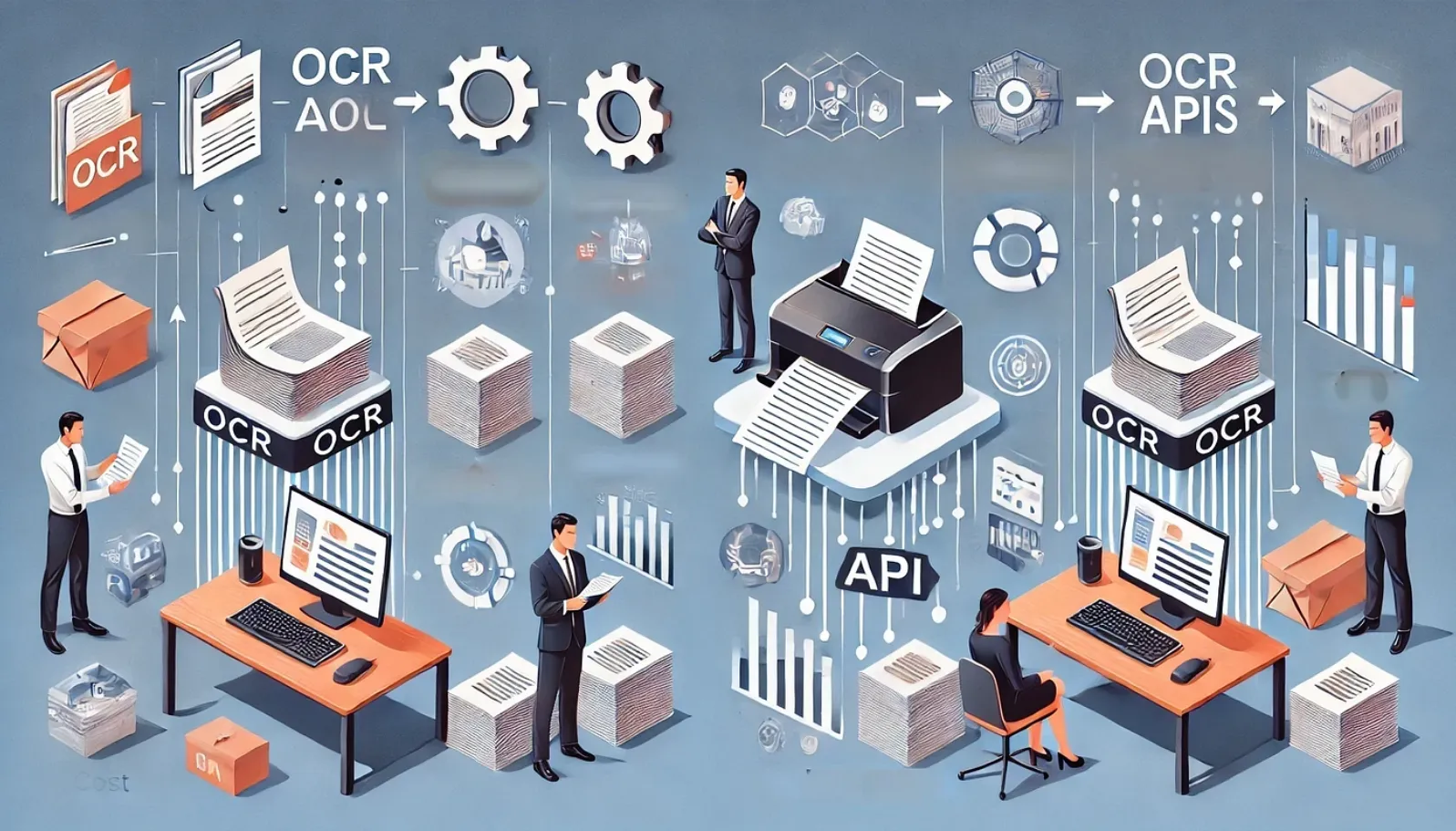
In an increasingly digital world, the need for efficient and accurate data extraction from documents is more crucial than ever. Whether you’re dealing with handwritten notes, legal contracts, or printed invoices, text recognition software has revolutionized how businesses process, store, and utilize documents. Recent advancements in text recognition technology have significantly improved the accuracy, speed, and versatility of processing both handwritten and printed documents.
This blog explores the latest developments in text recognition software, highlighting how they address the challenges associated with handwritten and printed document processing and what these advancements mean for various industries.
The Importance of Text Recognition Software
Text recognition software, commonly known as Optical Character Recognition (OCR), converts text from scanned images or printed documents into machine-readable data. Over the years, OCR technology has advanced from basic character recognition to more sophisticated systems capable of interpreting complex, unstructured data.
The primary goal of text recognition software is to automate the extraction of textual data from various document types, allowing businesses to streamline their workflows, reduce manual entry, and enhance productivity. For businesses dealing with high volumes of documents—such as legal firms, healthcare providers, and financial institutions—advanced text recognition is not just a luxury but a necessity.
Challenges in Handwritten and Printed Document Recognition
While text recognition software has seen rapid advancements, processing handwritten and printed documents remains a challenge for many systems. Here are some common issues that businesses face:
1. Variability in Handwriting Styles
Handwritten documents vary greatly in style, making it difficult for standard OCR systems to recognize text accurately. People have unique handwriting styles, which can include different slants, sizes, and shapes of letters, leading to inconsistencies in recognition.
2. Complex Layouts
Printed documents with complex layouts—such as forms, invoices, or multi-column text—can be challenging for OCR programs. Identifying text in these layouts, especially when combined with varying fonts and formats, requires advanced capabilities.
3. Degraded Document Quality
Scanned images often have poor quality, due to low resolution, noise, or distortions. Degraded documents can hinder traditional OCR software’s ability to accurately recognize text, especially when parts of the document are blurry or skewed.
4. Mixed Content Types
Documents that combine text, images, and other non-text elements, such as graphs, require OCR systems capable of distinguishing between these elements and extracting meaningful text.
Key Advancements in Text Recognition Software
1. Deep Learning and AI Integration
One of the most significant advancements in text recognition software is the integration of deep learning and artificial intelligence (AI). Traditional OCR systems relied heavily on predefined rules and templates, limiting their ability to handle complex and unstructured documents. However, with AI and deep learning, text recognition software has become far more adaptive and efficient.
Deep learning models, such as Convolutional Neural Networks (CNNs) and Recurrent Neural Networks (RNNs), have enabled text recognition software to:
- Learn from Data: AI-powered OCR systems can be trained on vast amounts of data, allowing them to recognize characters and words in various contexts, even across different languages and fonts.
- Handle Handwriting: Deep learning algorithms can now interpret different handwriting styles more accurately, dramatically improving the recognition of handwritten documents.
- Improve Accuracy: The software continues to learn and adapt, improving its accuracy over time with exposure to more data and various document types.
2. End-to-End Document Processing
Modern text recognition software is no longer limited to simply extracting text from documents. Advances have led to more comprehensive document processing capabilities, where the software can:
- Automatically Extract Key Data: Advanced systems can extract not just text but also structured data, such as dates, names, amounts, and other relevant fields, from scanned forms, invoices, or contracts.
- Classify Documents: New OCR systems are equipped with AI-driven document classification capabilities. This allows the software to automatically determine the type of document (e.g., contract, invoice, receipt) and apply appropriate recognition rules based on the context.
This approach saves businesses significant time by eliminating the need for manual categorization and data extraction.
3. Multilingual Support and Globalization
As businesses expand globally, the need for text recognition software that can handle multiple languages is becoming more critical. The latest advancements in OCR technology include multilingual recognition capabilities that support a wide range of languages and character sets.
For example:
- Latin-Based Languages: English, French, Spanish, German, and other Latin-based languages.
- Non-Latin Scripts: Support for languages like Chinese, Arabic, and Cyrillic scripts is also advancing, allowing businesses to process documents in diverse linguistic environments.
This global reach makes modern text recognition software a valuable tool for companies dealing with international contracts, documents, and invoices.
4. Cloud-Based OCR Solutions
Another significant advancement is the rise of cloud-based text recognition software solutions. Cloud-based OCR offers businesses a scalable, cost-effective way to process documents without the need for extensive hardware infrastructure. Cloud OCR solutions allow for:
- Remote Document Processing: Users can upload documents to the cloud and access OCR results from any device, enabling teams to work remotely and collaboratively.
- Scalability: Cloud-based systems can handle large volumes of documents efficiently, making them suitable for enterprises that need to scale their document processing operations.
- Real-Time Data Processing: Cloud OCR solutions often offer faster processing speeds, providing real-time results for businesses with time-sensitive needs.
5. Improved Image Preprocessing
Recent advancements in image preprocessing techniques have greatly enhanced the accuracy of text recognition software. Preprocessing includes cleaning up scanned images by:
- Correcting Skewed Text: Automatically adjusting images to ensure that the text is upright, making it easier for the OCR system to process.
- Noise Reduction: Reducing any background noise or artifacts in scanned images that can interfere with text recognition.
- Enhancing Text Contrast: Improving the contrast between text and background to ensure that the OCR software can easily detect and extract characters.
These improvements help the OCR software achieve better results with low-quality or distorted documents.
6. Integration with Other Technologies
Text recognition software is increasingly being integrated with other technologies to provide more advanced functionality. For instance:
- Robotic Process Automation (RPA): OCR systems are being integrated with RPA tools to automate entire workflows, such as invoice processing or contract management. Once the OCR software extracts data from a document, RPA bots can take further action, such as entering data into systems or triggering notifications.
- Natural Language Processing (NLP): NLP capabilities are being added to OCR software to help understand the context of the extracted text. This allows the software to perform tasks like sentiment analysis or content categorization, adding an additional layer of insight to document data.
Use Cases of Advanced Text Recognition Software
Advanced text recognition software can be applied in various industries, each benefiting from the ability to process handwritten and printed documents with high accuracy. Some key use cases include:
1. Healthcare
In healthcare, accurate recognition of handwritten prescriptions, medical records, and patient forms is crucial for improving operational efficiency and reducing errors. Advanced OCR software helps healthcare providers digitize medical records for easier access and analysis.
2. Finance and Banking
Banks and financial institutions handle a large number of forms, applications, and financial statements daily. OCR software streamlines data extraction from these documents, reducing manual data entry and improving accuracy in transaction processing, loan applications, and account opening forms.
3. Legal
Law firms and legal departments deal with contracts, case files, and legal documents, many of which are handwritten or printed in complex formats. Text recognition software helps automate the extraction of key clauses, dates, and references, saving time in legal research and document management.
4. Government
Government agencies process large volumes of forms, applications, and records. OCR systems help digitize and categorize these documents, improving data accessibility and making it easier for public servants to retrieve and process essential information.
Conclusion
The advancements in text recognition software are revolutionizing how businesses process handwritten and printed documents. From AI-driven deep learning models to cloud-based solutions and multilingual support, these innovations make it easier for organizations to automate document processing, improve accuracy, and enhance productivity. Whether you’re in healthcare, finance, law, or any other industry, adopting advanced text recognition technology will save time, reduce errors, and streamline your document management workflows.