

Introduction
The safety of our feline companions is really important for responsible cat owners. Cats are curious and independent, but the outdoors can be dangerous for them. Busy roads, predators, and fights with other cats are real risks. Many cat owners struggle with wanting to give their cats outdoor time while keeping them safe from these dangers.
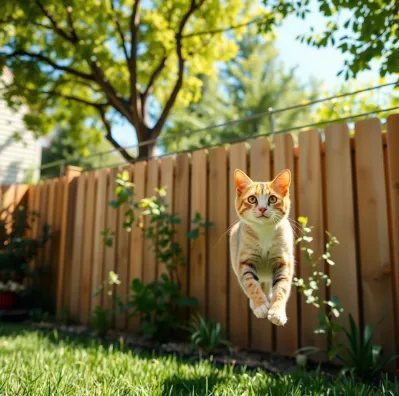
A cat fence topper is an important addition to secure gardens and outdoor spaces. It lets cats enjoy freedom while staying within your yard. These systems stop cats from climbing over fences, creating a secure boundary that balances your pet’s need for outdoor time with your need to keep them safe. With a good fence topper, your cat can enjoy fresh air, sunshine, and garden time without the risks of wandering freely.
This article will guide you through picking the right cat fence topper for your property. We’ll look at practical things like fence compatibility, material durability, installation requirements, and maintenance needs. These are all important for making a good choice that works for your property and your cat’s behavior. Whether you have a determined climber or a casual explorer, understanding these factors will help you create a secure outdoor space for your cat while giving you peace of mind.
Why You Might Need a Cat Fence Topper
Protecting Your Cat from Outdoor Hazards
The outdoors has many risks for cats that owners might not realize until something bad happens. Traffic accidents are one of the main causes of injury and death for outdoor cats, especially in urban and suburban areas. Even in quiet neighborhoods, cats can wander onto roads and get hurt. Vet statistics show that road accidents cause many emergency treatments for cats, often resulting in serious injuries or death even with immediate medical help.
Beyond traffic dangers, cats face threats from wild animals, toxic substances like antifreeze or pesticides, and fights with other animals. Territory fights with neighborhood cats can cause injuries and stress-related health problems. These conflicts often lead to infections and serious diseases like FIV or FeLV, which can really hurt your cat’s long-term health. There’s also the risk of theft or harm from people, especially for valuable purebred cats.
Comparing different cat containment systems shows that fence toppers provide an effective barrier against these hazards without stopping your cat from enjoying the outdoors. By preventing climbing and escape, these systems create a protective boundary that keeps cats safe in your garden while letting them explore, play, and act naturally. Unlike keeping cats indoors only, fence toppers offer the mental benefits of outdoor access while reducing the risks, creating a good compromise for cats that want outdoor experiences.
Enhancing Property Safety and Responsibility
Installing a cat fence topper shows responsible pet ownership that helps both your cat and your community. By keeping your cat in your yard, you’re being considerate of neighbors who might not like cats digging in their gardens or leaving messes. This consideration helps maintain good relationships with neighbors and prevents conflicts that can happen when pets regularly go into others’ properties. Many communities have rules about pet containment, making responsible boundaries both a legal and ethical matter.
From a wildlife protection view, containing your cat helps protect local birds and small animals that cats might hunt. Studies have shown that domestic cats can have a big impact on wildlife, especially in areas with vulnerable native species. Research estimates that free-roaming cats kill billions of birds and small animals every year worldwide, making cat containment an important environmental consideration. By keeping your cat in your yard, you’re helping local wildlife conservation efforts.
For cat owners living near busy roads or dangerous areas, a fence topper system gives peace of mind. Instead of keeping your cat indoors only—which may not be right for every cat’s personality—a secure outdoor space offers a good compromise that addresses both safety concerns and your cat’s natural desire to explore. This balanced approach to cat care recognizes their instincts while prioritizing their safety, resulting in happier cats and less worried owners who don’t need to stress about where their pet is or if they’re safe when outdoors.
Factors to Consider When Choosing a Cat Fence Topper
Fence Compatibility
The effectiveness of any cat fence topper starts with how well it works with your existing fence. Different fence types present different challenges for installation, making this assessment a crucial first step in your selection. Understanding the specific requirements of your particular fence will guide you toward solutions that provide good security without damaging your fence.
Wooden fences usually offer straightforward mounting options, with solid surfaces for attaching brackets and supports. However, the condition of the wood matters—rotting or weak wood may need reinforcement before installing a topper system. For wooden fences, systems that use mounting brackets often provide the most secure attachment. When checking wooden fences, look for signs of rot, especially near the ground or in joints where moisture collects. The thickness of fence posts and panels will also determine what fastening method and hardware you’ll need for secure installation.
Metal fences, including chain-link and wrought iron styles, present different challenges. Their open structure can make some topper systems hard to secure effectively. Special mounting hardware or adapters may be necessary to create a solid foundation for your cat fence topper. Systems designed specifically for metal fences typically include appropriate fastening mechanisms. For chain-link fences, solutions that can be woven through or attached to the mesh offer the most secure connection, while wrought iron fences may need clamp-style attachments that grip the vertical bars without damaging decorative elements.
Using a cat fence calculator can help determine exactly what components you’ll need based on your specific fence type and measurements. This ensures you buy the correct amount of materials and appropriate mounting hardware for your particular situation. These calculators typically account for fence length, height, material, and configuration, providing a customized list of components that will work together as a complete system rather than a piecemeal solution that might leave gaps.
Height and Coverage
The effectiveness of a cat fence topper depends heavily on proper measurements and complete coverage of your property’s perimeter. Cats are amazing climbers, capable of scaling significant heights and finding unexpected ways over obstacles. Their flexible spines and powerful hind legs let them jump several times their own body length, making height considerations particularly important when designing containment systems.
When checking your fence, consider both its existing height and the additional height provided by the topper system. Most effective cat containment systems recommend a minimum fence height of 1.8 meters (6 feet) including the topper. For especially athletic cat breeds like Bengals, Abyssinians, or Oriental Shorthairs, additional height may be necessary. These breeds have been known to clear impressive vertical distances, making standard recommendations potentially not enough. Watching your cat’s jumping and climbing behaviors can provide valuable insights into their specific abilities and the height requirements for your containment system.
Complete perimeter coverage is essential for effectiveness. Cats will quickly find gaps or weak points in your containment system. When measuring your property, account for all potential escape routes including:
- Gates and entryways, which often require specialized solutions that maintain security while allowing human access
- Corners where fences meet, which can create climbing opportunities if not properly secured
- Areas where different fence types connect, which may create structural vulnerabilities
- Adjacent structures like sheds or garages that could serve as climbing aids or alternative escape routes
- Trees or tall shrubs near fence lines that might provide alternative escape routes or jumping platforms
Avoiding common measurement mistakes can save significant time and frustration during installation. Take precise measurements of your entire perimeter, accounting for any irregularities or changes in fence height. Remember that ordering too little material can lead to incomplete coverage and potential escape points. It’s generally good to order slightly more materials than your initial calculations suggest to account for measurement errors or unexpected installation challenges. Professional installation services often include comprehensive site assessments to ensure accurate measurements and identify potential problem areas before installation begins.
Material and Durability
When selecting a cat fence topper, it’s crucial to make sure it works with your existing fence structure and can withstand various weather conditions. The materials used in your cat containment system will directly impact how long it lasts, how well it works, and how much maintenance it needs. Investing in high-quality materials at first may cost more upfront but typically results in better long-term value through longer life and better performance.
Good quality cat fence toppers typically use weather-resistant materials such as:
- UV-stabilized plastics that won’t break down or become brittle in sunlight, staying flexible and strong even after years in direct sun
- Anodized or powder-coated aluminum components that resist rust and maintain their appearance despite exposure to moisture and pollution
- Stainless steel fasteners and hardware that withstand moisture without rusting, preventing weakening at important connection points
- Reinforced nylon or polyethylene mesh that maintains strength despite environmental exposure and resists tearing even when cats try to climb it
Consider your local climate when evaluating material options. Areas with heavy snow may need more robust construction to handle the extra weight, while coastal regions with salt air exposure benefit from corrosion-resistant materials. Systems designed with these environmental factors in mind will last significantly longer and provide better value over time.
Ease of Installation
The practicality of a cat fence topper is partly determined by how easy it is to install. While professional installation is available for many systems, many cat owners prefer DIY options that can be completed without special tools or expertise. A system that balances effectiveness with simple installation offers the best value for most homeowners, letting them secure their property without too much complexity or cost.
When evaluating installation requirements, consider your personal skill level and available tools. Some systems may require power drills, saws for cutting components to size, or specialized fasteners. If you’re not comfortable with these requirements, look for systems with simpler installation methods or consider professional installation services. Many manufacturers offer installation support through video tutorials, customer service assistance, or networks of approved installers who can ensure proper setup if you prefer not to tackle the project yourself.
Aesthetics and Property Appearance
While functionality remains the main concern for cat containment systems, the visual impact on your property is a legitimate consideration for many homeowners. The appearance of your fence topper can affect your garden’s look and potentially influence neighborhood relationships. Finding a balance between effectiveness and visual integration with your existing landscape design contributes to overall satisfaction with your containment solution.
Modern cat fence toppers are increasingly designed with looks in mind, offering options that blend well with existing garden designs. Some systems, like Oscillot, feature relatively discreet components available in different colors to match your fence. The rotating paddle design works effectively while looking cleaner than mesh or netting alternatives. These design considerations show that manufacturers understand that containment solutions must address both functional requirements and homeowners’ desire to maintain attractive outdoor spaces.
Remember that while appearance matters, it should remain less important than functionality. A nice-looking system that fails to contain your cat effectively defeats its main purpose. The ideal solution balances aesthetic considerations with reliable performance. Many manufacturers now recognize this dual requirement and design systems that address both concerns without significant compromise to either aspect.
Common Mistakes to Avoid
Underestimating Your Cat’s Agility
One of the most common errors cat owners make when selecting a fence topper is failing to appreciate their pet’s amazing climbing abilities. Cats are natural athletes with physical capabilities that can easily overcome inadequate containment measures. Their combination of strength, flexibility, and problem-solving intelligence makes them particularly good at finding weaknesses in barriers that might seem sufficient to humans.
Different cat breeds and individuals show varying levels of athletic ability. Younger cats typically show greater determination and physical ability to climb obstacles, while certain breeds like Bengals, Abyssinians, and Oriental Shorthairs are known for their exceptional jumping and climbing skills. Bengals, with their wild ancestry, are particularly famous for their climbing abilities, often able to scale heights that would stop most domestic cats. When selecting a fence topper, it’s essential to consider your specific cat’s abilities rather than relying on general assumptions about what an average cat might be able to do.
The Oscillot system, for example, uses rotating paddles that prevent cats from getting the grip needed to pull themselves over a fence. This mechanical approach works by making it physically impossible for cats to complete their climbing motion, regardless of their athletic ability. When a cat tries to grip the top of the fence, the paddle rotates, creating an unstable surface that the cat cannot use to continue climbing. This design accounts for the natural climbing behavior of cats rather than simply trying to outmatch their jumping height.
Understanding common questions about cat containment can help you avoid underestimating what your cat might be capable of. Remember that determined cats will test boundaries repeatedly, looking for weaknesses in your containment system. The most effective solutions anticipate this behavior and create physical barriers that work regardless of your cat’s determination or agility. Watching your cat’s climbing patterns before selecting a system can provide valuable insights into their specific techniques and capabilities, allowing you to choose a solution that addresses their particular approach to testing boundaries.
Ignoring Property-Specific Challenges
Every property presents unique challenges for cat containment that must be addressed for a fence topper system to be fully effective. Failing to account for these specific elements is a common oversight that can compromise the security of your cat fence solution. A thorough assessment of your property’s particular characteristics is essential for designing a containment system that addresses all potential escape routes and vulnerabilities.
Uneven fence heights around your property create vulnerable points where cats may find easier escape routes. A comprehensive containment strategy must address these variations, potentially requiring customized solutions for different sections of your boundary. Some properties have a combination of fence types or heights that developed over time, creating an inconsistent perimeter that requires adaptive approaches. The most effective solutions account for these variations by providing appropriate coverage for each section while ensuring secure transitions between different fence types.
Trees, structures, and other climbing aids near fence lines present significant challenges. Cats can use these elements as stepping stones to bypass even well-designed fence toppers. Effective solutions may include:
- Trimming tree branches that overhang or come close to fence lines, creating a clearance zone of at least 1.5 meters (5 feet)
- Installing additional barriers on structures like sheds or garages that are positioned near fence lines
- Creating setbacks between climbable objects and fence lines, repositioning garden features where possible
- Using supplementary deterrents in areas where complete physical barriers aren’t possible
- Applying barrier solutions to trees themselves when they’re located directly on property boundaries
Exploring various cat fence solutions can help identify approaches that address your property’s specific challenges. The most effective containment strategies take a complete view of the entire property, identifying and addressing all potential escape routes rather than focusing solely on the main fence line. This comprehensive approach recognizes that cats will systematically test the entire perimeter, seeking any weakness that might allow them to get around your containment efforts. Professional assessment services can be particularly valuable for properties with complex boundaries or unusual features that create unique containment challenges.
Maintaining Your Cat Fence Topper
Routine Inspections
Regular inspection of your cat fence topper is essential for maintaining its effectiveness and extending its service life. Even the most durable systems require periodic checks to ensure all components remain secure and functional. Environmental factors, normal wear and tear, and your cat’s persistent testing of boundaries can all contribute to gradual deterioration that might go unnoticed without systematic examination.
We recommend setting up a regular inspection schedule, with complete checks at least every three months and quick visual inspections after major weather events. During these inspections, pay special attention to mounting brackets and hardware, moving parts like rotating paddles, connection points between system components, signs of wear or damage, and areas where your cat shows particular interest, as these may indicate potential weak points that your pet has identified.
Document any issues discovered during inspections and fix them promptly. Small problems can often be resolved quickly with minimal expense, while neglected maintenance issues may lead to bigger failures that compromise the entire system’s effectiveness. Keeping a maintenance log can help track patterns of wear or recurring issues that might indicate design weaknesses or installation problems requiring more comprehensive solutions. Most manufacturers offer replacement parts for common wear items, making repairs straightforward when problems are identified early.
Weatherproofing Measures
Environmental exposure is the main threat to the longevity of outdoor cat containment systems. Using appropriate weatherproofing measures can significantly extend the functional lifespan of your fence topper installation. Understanding how different weather conditions affect system components allows for targeted preventative maintenance that addresses specific environmental challenges in your region.
In areas with high rainfall or humidity, moisture can speed up corrosion of metal components and weaken attachment points. Make sure all hardware is properly sealed and consider applying additional weatherproof coatings to vulnerable areas. Check that water can drain properly from horizontal surfaces and doesn’t collect around connection points. Silicone sealants applied to screw holes and joints can prevent water getting in that might otherwise lead to internal corrosion or wood rot in supporting structures.
For properties in coastal areas, salt air corrosion presents a significant challenge. Regular freshwater rinsing can help remove salt deposits before they cause damage. Additionally, applying appropriate marine-grade protective coatings to metal components can provide an extra barrier against corrosion. Stainless steel hardware options, though more expensive initially, often prove more economical over time in coastal environments by eliminating the need for frequent replacement of corroded standard components.
Conclusion
Selecting the right cat fence topper for your property is an important step toward creating a safe outdoor environment for your cat. By carefully considering fence compatibility, height and coverage requirements, material durability, ease of installation, and appearance, you can make an informed decision that addresses both your cat’s safety needs and your property’s specific characteristics. This thoughtful approach ensures a solution that will provide long-term effectiveness rather than a temporary fix that might need frequent adjustment or replacement.
The investment in a quality containment system offers substantial returns in peace of mind. Rather than worrying about your cat’s whereabouts or safety, you can enjoy watching them explore and play within the secure boundaries of your garden. This balance between freedom and protection is an ideal compromise for both cats and their owners. Many cat owners report much less anxiety after installing effective containment systems, knowing their pets can enjoy enriching outdoor experiences without the risks of unrestricted roaming.
Remember that successful implementation requires attention to detail during both selection and installation. Take accurate measurements, account for your property’s unique challenges, and consider your individual cat’s abilities and behaviors. By avoiding common mistakes like underestimating your cat’s agility or neglecting property-specific obstacles, you’ll create a more effective containment solution. Professional consultation may be worthwhile for properties with complex boundaries or particularly determined feline escape artists.
Ongoing maintenance plays a crucial role in ensuring long-term effectiveness. Regular inspections and appropriate weatherproofing measures will extend the functional lifespan of your cat fence topper, protecting your investment and maintaining security for years to come. Establishing a routine maintenance schedule and promptly addressing any issues that arise prevents minor problems from developing into significant security vulnerabilities.
Ultimately, the right cat fence topper creates a win-win situation: your cat enjoys safe outdoor access while you gain the assurance that comes from knowing they remain protected within your property boundaries. This thoughtful approach to pet ownership improves your cat’s quality of life while showing responsibility toward both your pet and your wider community. By providing a secure outdoor environment, you’re offering your cat the enrichment they crave while protecting them from the hazards that make unrestricted outdoor access so dangerous for domestic cats in modern environments.