

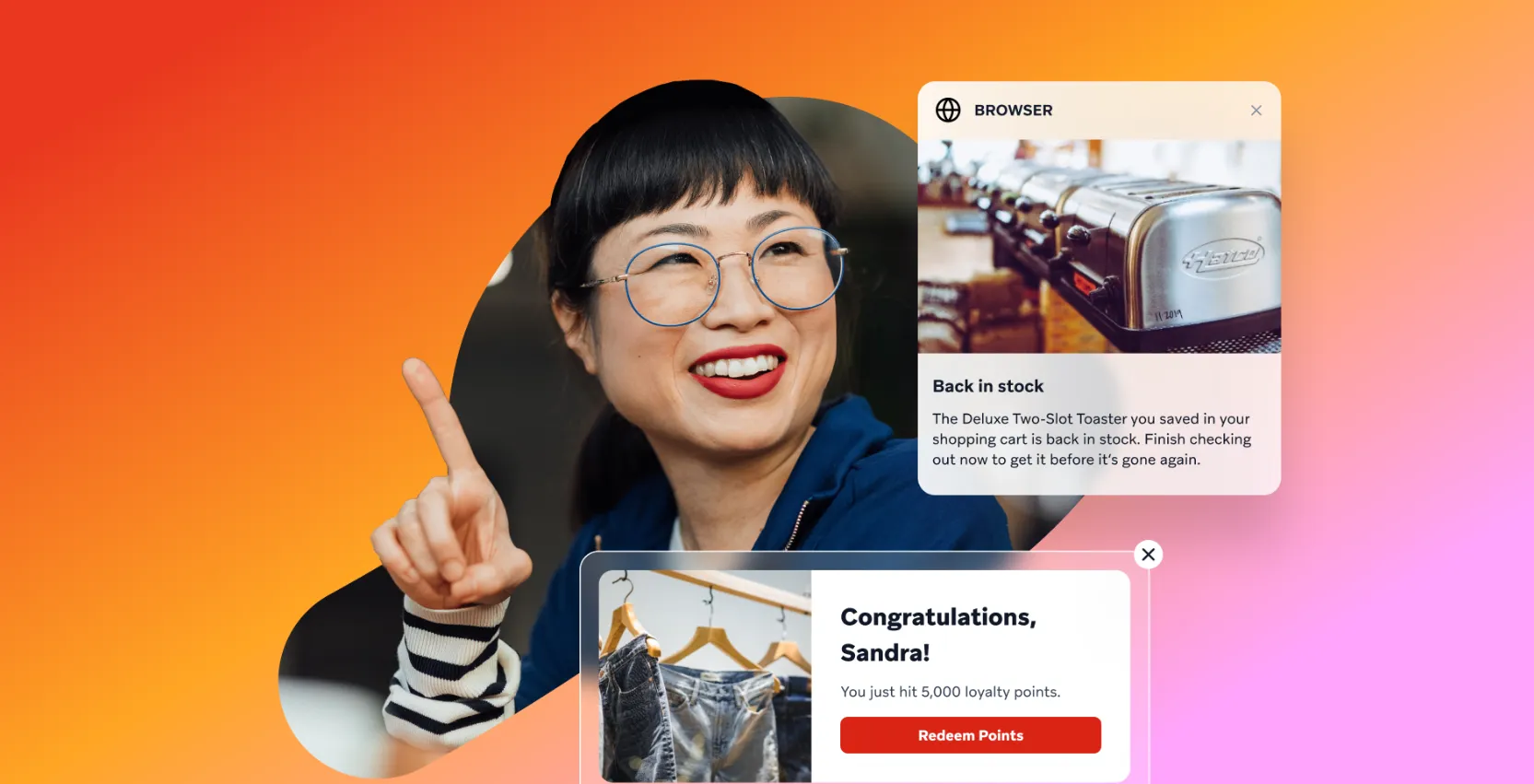
Direct-to-consumer brands have reached a turning point where acquisition alone is no longer the growth engine it once was. Paid media costs continue to climb, user attention has become harder to earn, and competition across product categories is fierce. The brands that continue to scale are winning not because they spend more, but because they convert more of the traffic they already have through radically improved post-click experiences. Tools such as in app message braze app capabilities now allow DTC teams to build responsive, behavior-driven journeys that guide users from curiosity to commitment without relying on aggressive selling tactics or disruptive pop-ups.
The real opportunity is no longer what happens before the click but what happens after it.
This playbook examines how the most innovative US DTC brands are leveraging Braze in-app messaging in conjunction with personalized post-click flows to boost engagement, expedite onboarding, and achieve significantly higher conversion and repeat-purchase rates.
Why Post-Click Personalization Is a Growth Priority for DTC
Many DTC brands spend months fine-tuning creative and targeting at the acquisition level, only to send every new visitor into the same generic experience afterward. The result is predictable performance decline: high bounce rates, abandoned onboarding, abandoned carts, and wasted media dollars.
Post-click personalization flips this model. Instead of treating every new customer as interchangeable, it designs the first session and the next ones around context:
- Where the user came from
- What message or offer did they click
- What they do once they arrive
- What information might they need next
In-app messages serve as real-time touchpoints inside that journey, surfacing helpful prompts, clarifying decisions, and steering momentum at the precise moment it matters.
The shift is simple:
Generic funnels → Adaptive journeys
Assumptions → Behavioral signals
Interruptions → contextual guidance
The DTC brands with the strongest retention curves understand that personalization is not a feature of the marketing stack; it is the foundation of profitable growth.
The Problem Most DTC Funnels Struggle With
Let’s break down what typically happens after a click:
- A user taps an Instagram ad
- They arrive on a generic homepage or product page
- They explore for 30–60 seconds
- They stall on a decision
- They exit
Traditional responses such as pop-ups, discount wheels, and aggressive timers often pressure rather than support. Instead of building trust, they create resistance. And once trust breaks, no offer is enough.
DTC customers today want:
- Clarity, not noise
- Help, not pressure
- Context, not assumptions
- Simplicity, not friction
In-app personalization supports decisions without manipulating them.
A New Model: Using Braze In-App Messages to Advance Intent
Below is a simplified framework for using in-app messaging as part of a personalized post-click experience. Think of it as a sequence of supportive interventions across key intention checkpoints.
| Intention checkpoint | User behavior | Opportunity |
| Curious | Browsing product categories | Surface collections, use-cases, or comparisons |
| Interested | Viewing PDPs, reading reviews | Add social proof, key value points, and explainer nudges |
| Considering | Adding to cart or hesitating | Clarify policies or benefits, bundle recommendations |
| Committing | Beginning checkout | Reduce risk perception, address objections |
| Returning | Post-purchase or tracking orders | Trigger cross-sell, personalized reorder cycles |
This is not a static flow; every step changes in response to real-time behavior.
Playbook Section 1 – Experience Mapping Before Messaging
Step 1: Identify high-value actions
Every DTC brand has different conversion drivers. For apparel, it may be “Add to Bag.” For beauty, it could be “Complete Shade Match.” For supplements, it may be “Start Subscription.”
Map the smallest possible action that demonstrates intent.
Step 2: Identify friction points
Where does the journey most commonly break?
Examples:
- Cart value stalls below the free-shipping threshold
- PDP views with no add-to-cart
- High bounce on trial-start forms
- Price objections before commitment
Step 3: Prioritize messages that clarify, reassure, or simplify
The highest-performing in-app messages reduce uncertainty, not add persuasion.
Playbook Section 2 – Message Archetypes Based on User Mindset
A different format: Rather than message types, we explore mindset-driven archetypes.
The Guide
Supports new visitors or first-time buyers struggling with orientation. Example: “Not sure which bundle is right for you? Start with a routine builder.”
The Reassurer
Addresses emotional hesitation and perceived risk. Example: “90-day no-questions-asked returns. Free exchanges on size and color.”
The Coach
Nudges momentum when intent is present but unclear. Example: “Add $14 more to unlock free 2-day priority shipping.”
The Validator
Uses social proof to strengthen decision confidence. Example: “2,100+ customers purchased this set in the last 72 hours.”
The Expander
Encourages upgrade or multi-item carts organically. Example: “Most customers pair this with…”
Each archetype corresponds to a mindset, not a funnel step, making messaging feel more human and less mechanical.
Playbook Section 3 – Where to Use In-App Messages for Maximum Impact
Changing structure: a scenario-based breakdown, not page-based.
Scenario A: First-time visitor from paid social
Goal: Build trust fast
Use: storytelling, social proof, value framing
Scenario B: Returning visitor who has browsed multiple times
Goal: Answer objections
Use: comparison messages, expert commentary, risk reduction
Scenario C: Cart-builder with high AOV potential
Goal: Increase order completeness
Use: bundles, upgrades, “complete the routine”
Scenario D: Subscription hesitant
Goal: Clarify subscription value
Use: cost breakdown, savings explanation, pause-anytime reassurance
The format is dynamic depending on identity and journey, not static location.
Playbook Section 4 – Creative Guidelines for Conversion-Driven Messaging
Instead of bullet rules, a principle-based set:
- Be intentional, not interruptive. Display messages as a response to behavior, rather than as a pop-up timer.
- Be concise, not compressed. One sentence with a single action beats a paragraph of persuasion.
- Be transparent, not gimmicky. No fake scarcity, no countdown traps, no bait-and-switch offers.
- Be optional, not forced. Clear exit options increase trust and conversions.
When users feel respected, they move forward willingly.
Playbook Section 5 – What to Measure (and What Not to)
Most teams measure the wrong signals first: open rates, click rates, and impressions. These are vanity metrics. What matters is whether in-app experiences change behavior.
Focus on:
- Funnel progression before and after message introduction
- A/B difference on checkout and add-to-cart completion
- Time to first conversion
- Impact on repeat purchase cycle
- LTV lift tied to personalized vs. generic flows
If metrics do not change behavior, the message is irrelevant.
Playbook Section 6 – Mistakes That Kill Performance
Top pitfalls DTC brands should avoid:
- Using every message format everywhere
- Treating all users the same after click
- Introducing discounts before trust is established
- Over-segmenting without sufficient data
- Relying only on urgency instead of a value explanation
- Handing personalization responsibility only to marketing rather than product, CRM, CX, and tech
The strongest personalization programs sit at the intersection of function, not department.
Examples of Strategic Execution in the Wild
No brand called out directly, example concepts instead:
- A luxury apparel brand reveals fit-based reviews only after users engage with the size selector, leading to higher conversion rates for premium sizes.
- A supplement company surfaces subscription cost-savings only after multiple PDP views, lifting subscription adoption by double digits.
- A skincare brand uses personalized bundles triggered by ingredient preferences, increasing AOV by 26%.
These improvements come from insight and timing, not louder CTAs.
Conclusion
The advantage no longer belongs to the brand with the biggest ad budget it belongs to the brand with the sharpest personalization strategy. Connecting Braze in-app messaging with post-click behavior design enables DTC companies to guide customers through meaningful, confidence-driven journeys that convert intention into real revenue.
As acquisition efficiency declines, profitable growth now depends on:
- Better experience architecture
- Real-time behavioral insight
- Supportive and human-centered messaging
Post-click personalization is the new frontier of DTC performance.
The brands that master it will not only convert traffic, but also retain loyalty and scale profitably.