

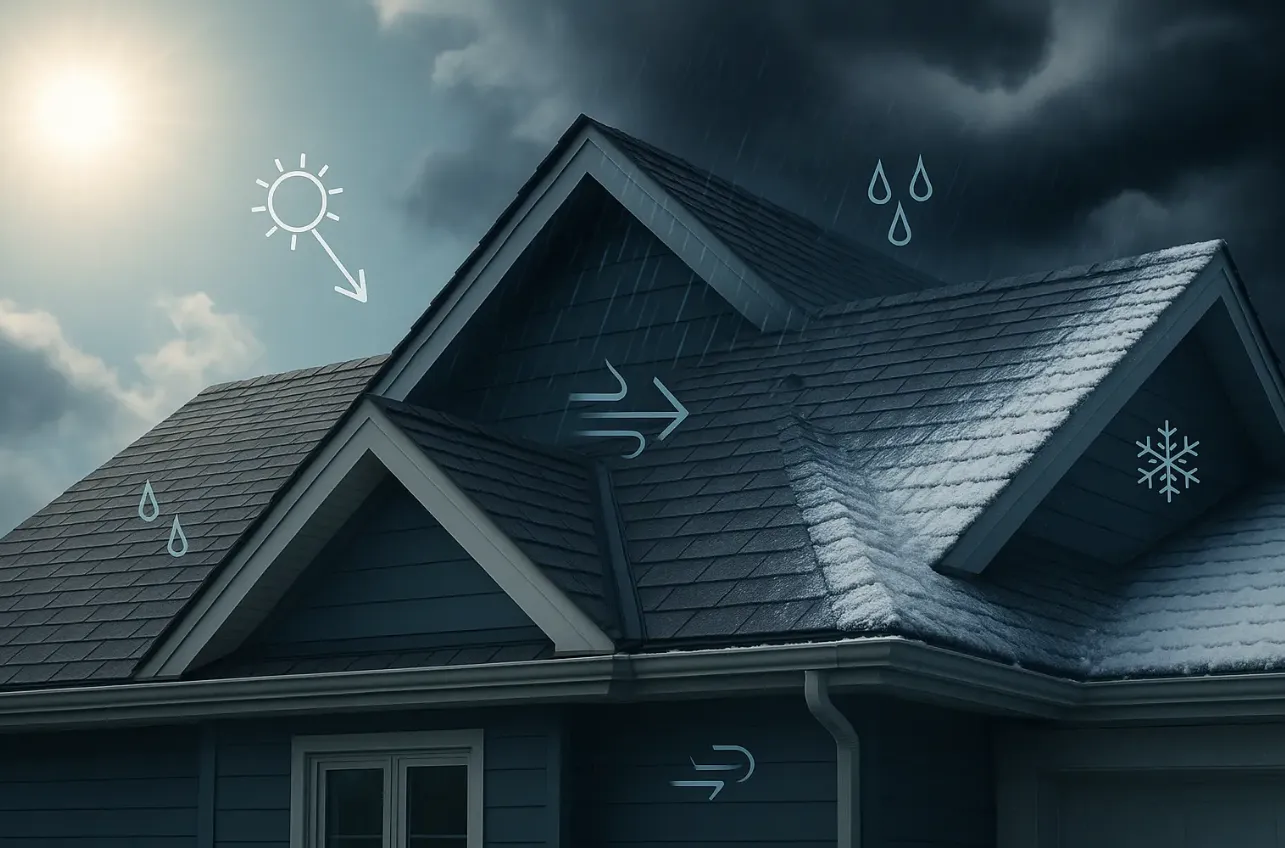
A roof doesn’t fail all at once. It wears down quietly, season by season, shaped by the weather it endures rather than the day it was installed. Sun, snow, wind, rain, and temperature swings all leave their mark over time, often in ways homeowners don’t notice until problems appear. That’s why people researching premium roofing materials often discover that durability isn’t just about build quality,it’s about how well a roof works with the climate instead of fighting it.
Every roof tells a story of exposure. Some materials age gracefully under certain conditions and struggle under others. Understanding how climate affects roofing lifespan helps homeowners make choices that reduce stress, extend performance, and avoid premature replacement.
Let’s look at how weather shapes a roof’s life,and why climate awareness matters more than most people expect.
1. Sun and Heat: The Silent Accelerators of Roof Aging
Sun exposure is one of the most underestimated forces acting on a roof.
UV Radiation Breaks Materials Down Slowly
Ultraviolet rays don’t cause dramatic damage overnight. Instead, they:
- dry out roofing materials
- weaken surface coatings
- fade colour
- reduce flexibility
Over time, this makes materials more brittle and vulnerable to cracking.
Heat Causes Expansion and Contraction
Daily temperature changes create constant movement. Materials expand when heated and contract as they cool. Repeated over thousands of cycles, this movement can:
- loosen fasteners
- stress seams and joints
- create micro-cracks
- weaken adhesive
In warmer climates or sun-exposed rooflines, this thermal movement becomes a major factor in lifespan.
Dark vs Light Surfaces
Darker roofing absorbs more heat, which can increase surface temperatures significantly. This doesn’t mean darker roofs are “bad,” but it does mean material choice and ventilation become even more important.
Heat doesn’t announce itself as damage,it accumulates quietly until the roof begins to show its age.
2. Cold, Snow, and Freeze-Thaw Cycles
In colder climates, roofs face a different set of challenges.
Freeze-Thaw Is One of the Toughest Stress Tests
When water seeps into small gaps and freezes, it expands. When it thaws, it contracts. This cycle:
- widens cracks
- loosens materials
- degrades seals
- accelerates wear
Even durable materials must be chosen and installed with freeze-thaw cycles in mind.
Snow Adds Weight and Moisture Risk
Snow accumulation affects roofs in two ways:
- physical load
- prolonged moisture exposure
Heavy snow places stress on structure, while melting snow can refreeze at edges, forming ice dams.
Ice Dams Cause Hidden Damage
Ice dams trap melting water, forcing it back under roofing materials. This can lead to:
- moisture intrusion
- insulation damage
- rot
- mold
Roofs in snowy regions need materials and designs that manage water efficiently,even when temperatures fluctuate.
Cold doesn’t just slow deterioration; in many cases, it intensifies it.
3. Rain, Humidity, and Moisture Exposure
Water is persistent, patient, and relentless.
Rain Tests a Roof’s Seams, Not Its Surface
Most roofing materials are designed to shed water easily. Problems usually occur at:
- seams
- penetrations
- flashing
- edges
Repeated rainfall reveals weaknesses over time, especially in climates with frequent storms.
Humidity Slows Drying
In humid regions, moisture lingers longer. Roofs may:
- stay damp between storms
- dry unevenly
- encourage organic growth
This prolonged moisture exposure can shorten lifespan if materials aren’t chosen carefully.
Organic Growth Signals Trapped Moisture
Moss, algae, and lichen don’t just affect appearance. They indicate that moisture is staying on the roof longer than it should.
Over time, this can:
- weaken surface layers
- lift edges
- compromise protective coatings
A roof’s ability to dry quickly is just as important as its ability to repel water.
4. Wind and Storm Activity: Stress You Can’t Always See
Wind doesn’t need to rip shingles off to cause damage.
Repeated Wind Stress Loosens Systems
Strong or frequent winds create uplift forces that:
- strain fasteners
- flex panels or shingles
- weaken edges and corners
Even when nothing appears broken, these stresses accumulate.
Storm Debris Creates Impact Damage
Flying debris during storms can:
- crack tiles
- dent metal
- puncture membranes
Some damage isn’t immediately visible but can compromise the roof’s protective layers.
Edge Performance Matters Most
Roof edges, ridges, and transitions experience the greatest wind forces. Materials that perform well in calm conditions may fail prematurely if not designed for high-wind environments.
Storm resistance is about resilience, not invincibility.
5. Why Climate-Appropriate Materials Extend Roof Lifespan
No roofing material is immune to weather,but the right one for the right climate ages more slowly and predictably.
Materials Perform Differently Under the Same Conditions
Some materials handle heat exceptionally well but struggle with cold. Others manage freeze-thaw cycles beautifully but require proper ventilation in hot conditions.
Choosing wisely means understanding:
- local weather patterns
- seasonal extremes
- long-term climate trends
Installation and Design Matter as Much as Material
Even the best roofing material can fail if:
- ventilation is inadequate
- underlayment isn’t appropriate
- flashing is poorly detailed
- slope isn’t compatible
Climate-aware design supports material performance rather than undermining it.
Predictable Aging Is a Sign of Good Choice
A roof that ages evenly,without sudden failures,allows homeowners to plan maintenance instead of reacting to emergencies.
Longevity isn’t just about how long a roof lasts. It’s about how it behaves along the way.
The Takeaway: Climate Shapes Roofing More Than Time Alone
Roof lifespan isn’t determined by age alone. It’s shaped by daily exposure to sun, cold, moisture, and wind,forces that act quietly but persistently.
The most resilient roofs share a few things in common:
- materials suited to local climate
- designs that manage water and airflow
- installation that respects environmental stress
- expectations grounded in long-term performance
Choosing roofing materials with climate in mind isn’t about preparing for worst-case scenarios,it’s about respecting reality.
A roof that works with the weather lasts longer, performs better, and asks less of the homeowner over time.
In the end, the smartest roofing decisions aren’t the ones that look impressive on day one.
They’re the ones that still do their job,quietly and reliably,years down the road, through every season that comes their way.