

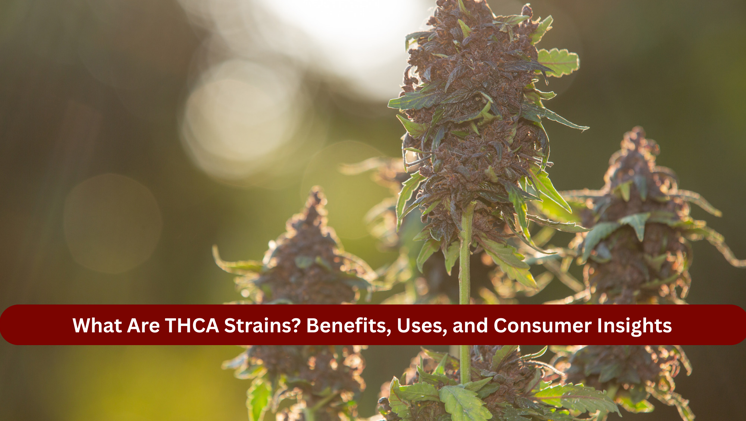
Cannabidiol (CBD) and tetrahydrocannabinol (THC) are perhaps the first names that spring to mind when we think of cannabinoids. That’s perfectly understandable, as CBD and THC are marijuana’s most popular extracts.
However, the cannabis plant produces over 100 other cannabinoids. That includes lesser-known compounds like tetrahydrocannabinolic acid (THCA).
Understanding THCA’s biological mechanism is critical in predicting its therapeutic effects.
We’ve prepared a comprehensive guide to tetrahydrocannabinolic acid to help you understand this compound better. The post shall highlight THCA’s signature effects, before narrowing down to some of the most THCA-dominant strains.
What Is THCA?
Tetrahydrocannabinolic acid, commonly abbreviated as THCA, is one of the 100+ phytocannabinoids in marijuana. THCA exists as a precursor to tetrahydrocannabinol – cannabis’ most potent mind-altering compound.
Most cannabis extracts are either THC-based or CBD-based. However, marijuana cannabinoids mostly exist as THCA in their natural states.
THCA converts to THC via a chemical process called decarboxylation.
Not only does decarboxylation alter THCA’s molecular structure. It also converts the compound from its inert state into one of the most potent psychedelic substances.
As cannabis mostly contains tetrahydrocannabinolic acid in its natural form, you’d expect all weed strains to provide equal THCA levels. But that’s not so.
There are specific THCA strains, with some bred exclusively to be higher in this inert cannabinoid.
How Does THCA Make You Feel?
Although tetrahydrocannabinolic acid is a precursor to tetrahydrocannabinol, the compound is non-psychoactive.
THCA won’t get you high. You can judge the compound’s effects more reliably by assessing its therapeutic efficacy.
THCA’s non-psychoactive properties are due to its chemical structure, which includes an additional carboxylic acid group (-COOH). The extra -COOH group prevents the acid from binding to CB1 receptors, a mechanism that induces the euphoric effects associated with THC.
Tetrahydrocannabinolic acid only becomes psychoactive when it loses the -COOH group. That’s where decarboxylation comes in, transforming the dormant THCA into a potent mind-altering THC.
What Are THCA Strains?
THCA strains are cannabis cultivars that contain significantly higher concentrations of tetrahydrocannabinolic acid.
Many are regular strains you’re already familiar with, whereas others are exotic varieties bred primarily to provide higher THCA yields.
Lemon Cherry Gelato (LCG)
Lemon Cherry Gelato is an indica-dominant hybrid beloved for its sweet, citrusy flavor.
The strain produces balanced effects, which begin as a heightened cerebral high before transitioning into deep relaxation.
Descended from Sunset Sherbet and Girl Scout Cookies (GSC), Lemon Cherry Gelato ranks among the highest THCA strains.
Raw LCG flowers can provide ~28% to 33% of tetrahydrocannabinolic acid.
Ice Cream Cake (ICC)
Ice Cream Cake’s flavor is unmistakable. The strain has piqued the interest of many cannabis connoisseurs for its sweet taste, punctuated with vanilla notes.
Like Lemon Cherry Gelato, Ice Cream Cake is deeply relaxing. Measured doses of this iconic strain can alleviate body aches, nervousness, sleeplessness, and inappetence.
Ice Cream Cake is a cross between Wedding Cake and Gelato #33. The strain provides well over 28% THCA.
Sour Diesel (Sour D)
Sour Diesel may not be the most delectable cannabis strain. But don’t let its gassy aroma push you away.
A sativa-leaning hybrid, Sour D is remarkably uplifting. It’s the perfect strain to administer for chronic fatigue, mood disorders, and diminished creativity.
Sour Diesel’s effects derive from its nuanced genetic origin. The strain traces its roots to Chemdawg 91 and Super Skunk, with possible Northern Lights contribution.
Freshly harvested Sour D buds can contain around 30% tetrahydrocannabinolic acid.
Frosted Kush
Frosted Kush is an indica-dominant cannabis hybrid instantly recognizable for its frosty trichomes.
Derived from Hindu Kush and another unidentified parent, Frosted Kush offers a balance of cerebral high and mental relaxation. The strain also boasts a rich flavor profile complemented by sweet, berry, gassy, and earthy notes.
THCA levels in Frosted Kush flowers often stagger around 40%.
Note that THCA strains don’t exclusively contain tetrahydrocannabinolic acid. They equally abound in several other cannabinoids plus terpenes, enabling them to produce full-spectrum therapeutic benefits.

Therapeutic Applications and Usage Guidelines
Marijuana’s cannabinoids have overlapping therapeutic benefits. According to previous studies, these compounds may offer pain relief, treat anxiety, and boost sleep quality.
Most cannabinoids also boast anti-inflammatory, antispasmodic, antiemetic, and antioxidant properties.
Tetrahydrocannabinolic acid has notably proven effective against unhealthy weight gain. In one study, researchers found that administering THCA could reduce body weight gain and improve glucose tolerance.
THCA also boasts neuroprotective properties.
According to previous experiments, consuming tetrahydrocannabinolic acid – alongside cannabidiolic acid (CBDA) – may slow down memory loss. These findings designate THCA as a potential remedy for neurodegenerative disorders like Alzheimer’s disease (AD).
To make the most of THCA strains, insist on high-quality products.
Prioritize flowers that come in vibrant hues. Shun dull-colored buds, as that indicates contamination or degradation.
High-quality THCA strains should also smell fresh and have a slightly sticky aroma.
More importantly, choose products that come with certificates of analysis (CoA) as evidence of third-party laboratory screening.
Summary
Tetrahydrocannabinolic acid may be relatively new in our collective conscience. But its therapeutic applications are well-documented.
As a precursor to tetrahydrocannabinol, THCA provides similar medicinal benefits as THC.
The principal difference is that THCA exists as an inert cannabinoid. Therefore, it lacks THC’s mind-altering effects.
Like other non-psychoactive cannabinoids (such as CBD), THCA provides a truckload of health benefits without inducing intoxication. That makes it particularly popular with medical cannabis users.
To make the most of tetrahydrocannabinolic acid, administer the compound sparingly. Note that an overdose might trigger undesired effects like drowsiness and nausea.