

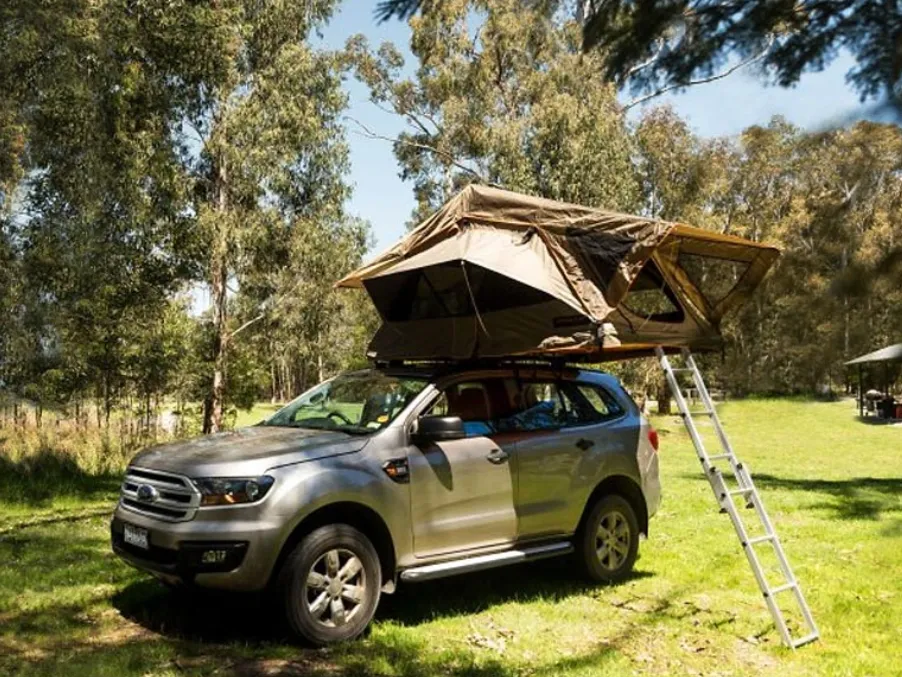
Choosing a roof top tent is not about picking the one that looks good in photos. It is about matching the tent to how you actually camp. Australia’s landscapes include deserts that hit 48°C, coastal sites with salt air and humidity, and alpine areas that dip below freezing. The best roof top tent Australia has to handle all of it. Here is what to focus on before you spend a cent.
How Do You Compare Hard Shell vs Soft Shell Roof Top Tents?
Hard shells are faster to set up and more aerodynamic at highway speed. Soft shells pack flatter and usually offer more sleeping space per dollar. Hard shells add less wind drag, which means less fuel consumption. At 100km/h, a soft shell RTT can add 15 to 20% to fuel use. Hard shells typically add 5 to 8%. For people who drive long distances between camps, that difference adds up across a trip.
What Waterproofing Standards Should Your Roof Top Tent Meet?
The hydrostatic head rating tells you how waterproof a fabric is. A minimum of 3000mm HH is needed for regular Australian use. Premium tents reach 6000mm or higher. The seams matter just as much as the fabric. Look for taped or welded seams, not just stitched ones. Stitched seams without sealing compound leak in sustained rain. East coast and tropical Queensland camping zones get heavy rainfall. Do not compromise on waterproofing if you camp year-round.
Does Pole Quality Affect Long-Term Durability?
Poles are one of the most common failure points in budget tents. Fibreglass poles flex but crack under repeated stress. Aluminium 7001 series poles are the industry standard for RTTs. They are stronger and do not degrade under UV exposure. Some premium tents use aluminium alloy extrusions for the tent frame itself, which eliminates poles altogether. These designs last longer but cost more upfront. Over three to five years of regular use, the frame investment pays for itself.
How Important Is the Mattress in a Roof Top Tent?
Very important. You are sleeping elevated off the ground, often on a sloped surface. Most RTT mattresses are high-density foam between 60mm and 80mm thick. This is fine for occasional use. For weekly or monthly camping trips, a 75mm high-density foam rated at 30 to 35kg/m3 density gives long-term support. Cheaper foams compress and lose their shape after 20 to 30 nights of use. A degraded mattress gives you a back problem, not rest.
What Should You Know About Zipper Quality on Roof Top Tents?
Zippers fail more than any other component on cheap tents. YKK zippers are the gold standard. They are used on tents that retail above $1,800 AUD for good reason. A 10mm coil YKK zipper can open and close over 5,000 times before showing wear. Cheap zippers fail at 500 to 800 cycles. On a tent you use 50 times a year, that is less than two years. Always check zipper brand before buying. It is a detail that brands either mention or quietly skip.
Is Weight a Major Factor When Selecting a Roof Top Tent?
Weight affects both your roof load and your fuel economy. Most quality RTTs weigh between 40kg and 65kg. Add your bedding and accessories and you are looking at 55 to 80kg on the roof. Every 25kg on the roof raises the centre of gravity. This affects cornering stability, especially on unsealed roads. A lighter tent also means less stress on your roof rack mounting points over time. Always check both roof rack and crossbar weight limits before purchase.
How Do You Assess Ventilation Before You Buy a Roof Top Tent?
Ask how many separate mesh openings the tent has. Count the windows. Look at their placement. A tent with windows only on one side gets no cross-airflow. Good RTTs have at least four openable mesh panels. Stargazer roof windows are a bonus for airflow and for looking at the sky at night. In northern Australia, mosquito mesh quality also matters. A 20D no-see-um mesh with less than 0.6mm aperture keeps sandflies out. Most budget tents use lower-density mesh that lets small insects through.
What Warranty Should You Expect From a Quality Australian RTT Brand?
A two-year warranty is the minimum from any brand worth trusting. Premium brands offer three to five years on structural components. Fabric and zipper warranties often differ from structural ones. Read the fine print. Some brands only cover manufacturing defects, not UV degradation or zipper wear. In Australia, UV damage is a real issue within five years if fabric quality is low. Look for brands that specifically include UV and weather-related degradation in their coverage.